11 Afrohemian Living Room Ideas for 2026 — From Real Moroccan Artisans

A 2026 Afrohemian living room guide from real Moroccan artisans — the palette, the textiles, and one hero Sabra silk pillow to start with.

Written by the Tigemi atelier · Handwoven in Morocco · Updated June 2026 · 9-min read

There’s a particular kind of room taking over Pinterest this year. It isn’t loud, and it isn’t perfect. It looks like it was gathered slowly — a rug carried back from a market, pillows that don’t quite match, a basket that’s clearly handmade. Warm, layered, lived-in. It has a name now: Afrohemian. And it’s shaping up to be one of the defining decor moods of 2026.

We’re Tigemi — a small atelier weaving Sabra (cactus) silk in Morocco alongside artisan families in the Atlas and the workshops of Taznakht and Fès. So when this look went global, it didn’t feel like a trend to us. It felt like a description of home. Afrohemian is built on the exact craft we work with every day, which means we can do more than show you pretty pictures. We can teach you how to build it honestly — one real, handmade piece at a time.

What Is Afrohemian Style?

Afrohemian style is a 2026 interior design trend that blends African and Amazigh (Berber) craft with relaxed bohemian comfort. It centers on warm earth tones, handwoven textiles, natural materials, and layered texture — a soulful, collected look that celebrates heritage and artisanship over polished, mass-produced minimalism.

Think of it as the warm-blooded answer to beige minimalism. Where minimalism strips a room down to nothing, Afrohemian builds it up with meaning — every pillow, rug, and basket carrying a maker, a region, a story. That’s exactly why a flat-pack showroom can’t fake it, and why the people who make these textiles by hand have something real to teach you about wearing the look well.

Here are the eleven moves we’d make ourselves, roughly in the order we’d make them.

1. Build a Warm Earth-Tone Palette First

Afrohemian color begins in the ground. Picture a Moroccan hillside at golden hour and you already have your base: terracotta, saffron, rust, ochre, clay, olive, and warm cream. These grounded tones carry the room and make everything that follows feel calm and intentional.

Then come the accents — the one or two richer notes that get to speak up: deep indigo, plum, burnt crimson, emerald. The discipline is in the ratio. Keep most of the room in warm neutrals, then let a single rust pillow or an indigo throw raise its voice. A quiet canvas is what makes a bold tone read as chosen instead of cluttered.

From our dye house: our rust and ochre come from natural pigments, so the color shifts gently as the light moves across it through the day. That small imperfection is the whole secret. Flawlessly uniform color reads as factory; a tone that breathes reads as collected.

2. Layer Texture You Can Actually Feel

If color is the foundation, texture is the soul — and Afrohemian lives almost entirely in the hand. The simple test we use: the more your fingers want to reach out and touch a room, the closer it is to right.

Aim for at least three distinct textures in a single seating area before you stop. The light-catching slub of handwoven Sabra silk. The dense warmth of wool. The honest roughness of jute. Cool, smooth leather. Open, airy rattan. Throw a wool blanket over a leather chair, slide a jute mat beneath a soft Beni Ourain, pile silk pillows against plain linen. That contrast — soft against rough, matte against sheen — is what fakes the feeling of a room assembled over years.

3. Learn the Textiles — This Is the Heart of the Look

Here is where most decor blogs go vague, and where we can actually help, because these are the fabrics we weave. Afrohemian is not “boho with brown.” Each cloth carries a specific heritage, and knowing even a little turns a nice room into a knowledgeable one:

  • Sabra silk (cactus silk) — our craft. A vegan “silk” handwoven from the agave cactus, prized for its soft luster and surprising strength, dyed in earthy naturals. The ideal Afrohemian pillow.
  • Mudcloth (Bògòlanfini) — a Malian cotton dyed with fermented river mud and marked in bold white geometric symbols. Graphic, ancestral, perfect as a statement pillow or throw.
  • Kente — Ghana’s strip-woven cloth of vivid color blocks and meaning-rich patterns. Use it as a true accent, in small doses.
  • Beni Ourain — the ivory-and-charcoal hand-knotted wool rug of the Atlas Mountains. It anchors a room and balances all that warmth with calm.
  • Ankara & Kuba cloth — West and Central African prints and raffia weaves for when you want a hit of pattern energy.

You don’t need all of them. One Beni Ourain rug and two or three Sabra silk pillows already speak the language fluently. The look rewards restraint, not accumulation.

4. Mix Patterns With Quiet Confidence

Pattern mixing is the part everyone fears, and it’s the easiest rule in the guide once you hear it: stay in one color story, and vary the scale. Set a large geometric Amazigh motif beside a thin stripe and a flat solid, and keep all three in the same family — rust, cream, a whisper of black. Because the colors agree, the eye reads the mix as deliberate, not chaotic.

Style pillows in odd numbers, mix their sizes, and let the patterns hold a conversation rather than a chorus. Matching is for catalogs. Conversation is for collected rooms.

5. Anchor the Room With One Hero Pillow

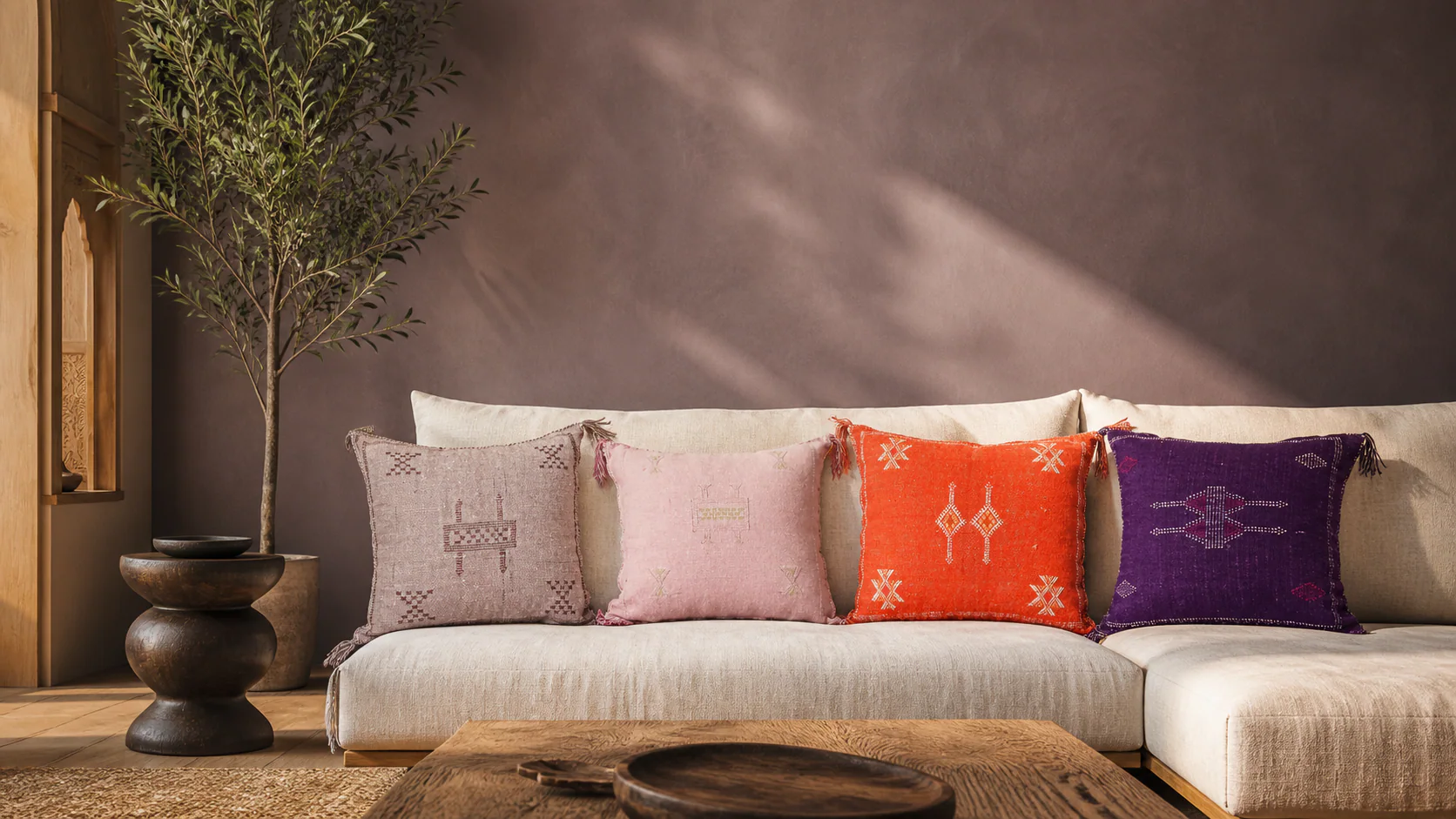
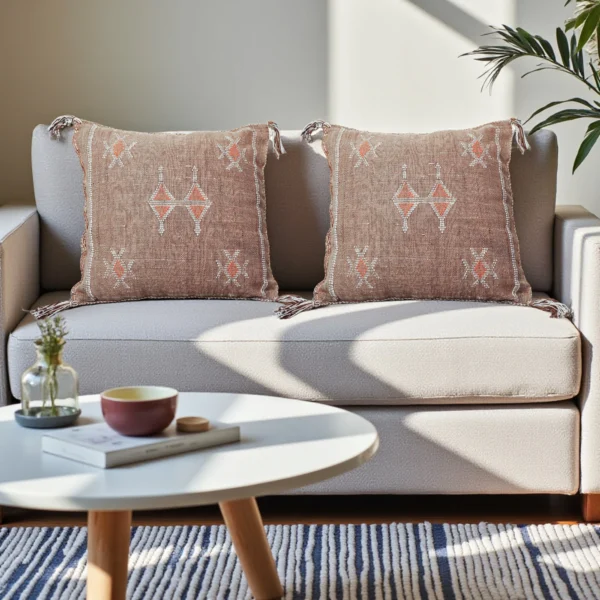
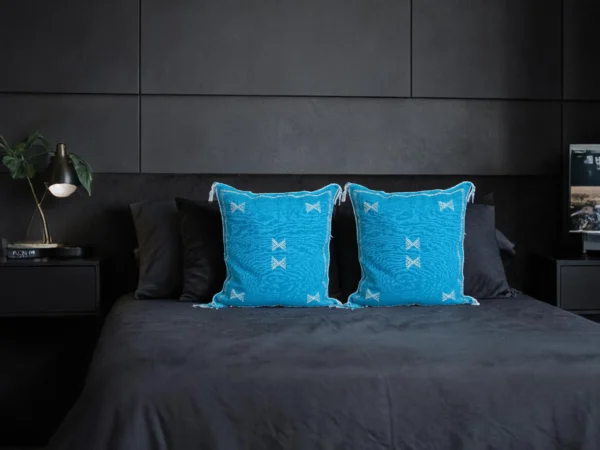
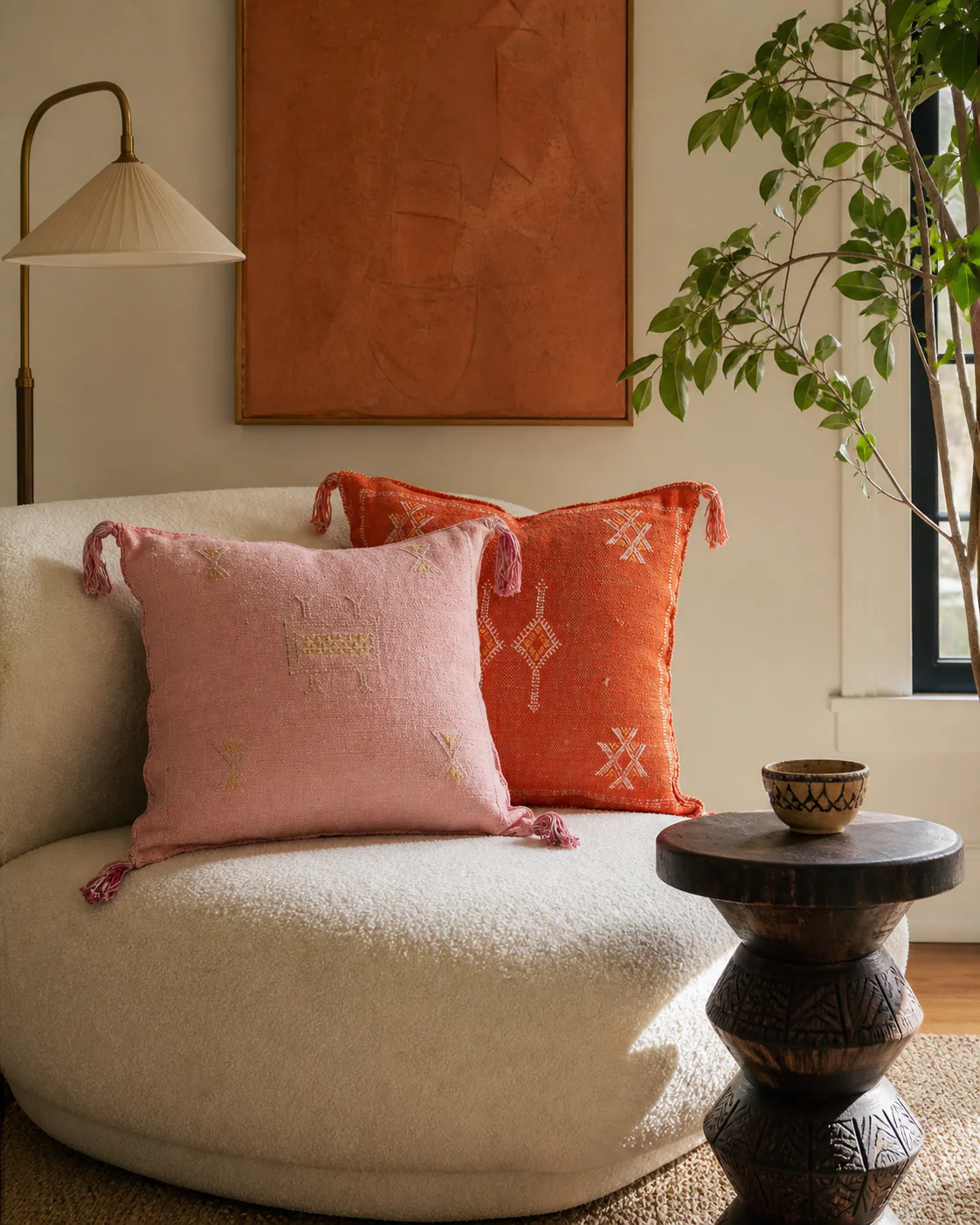
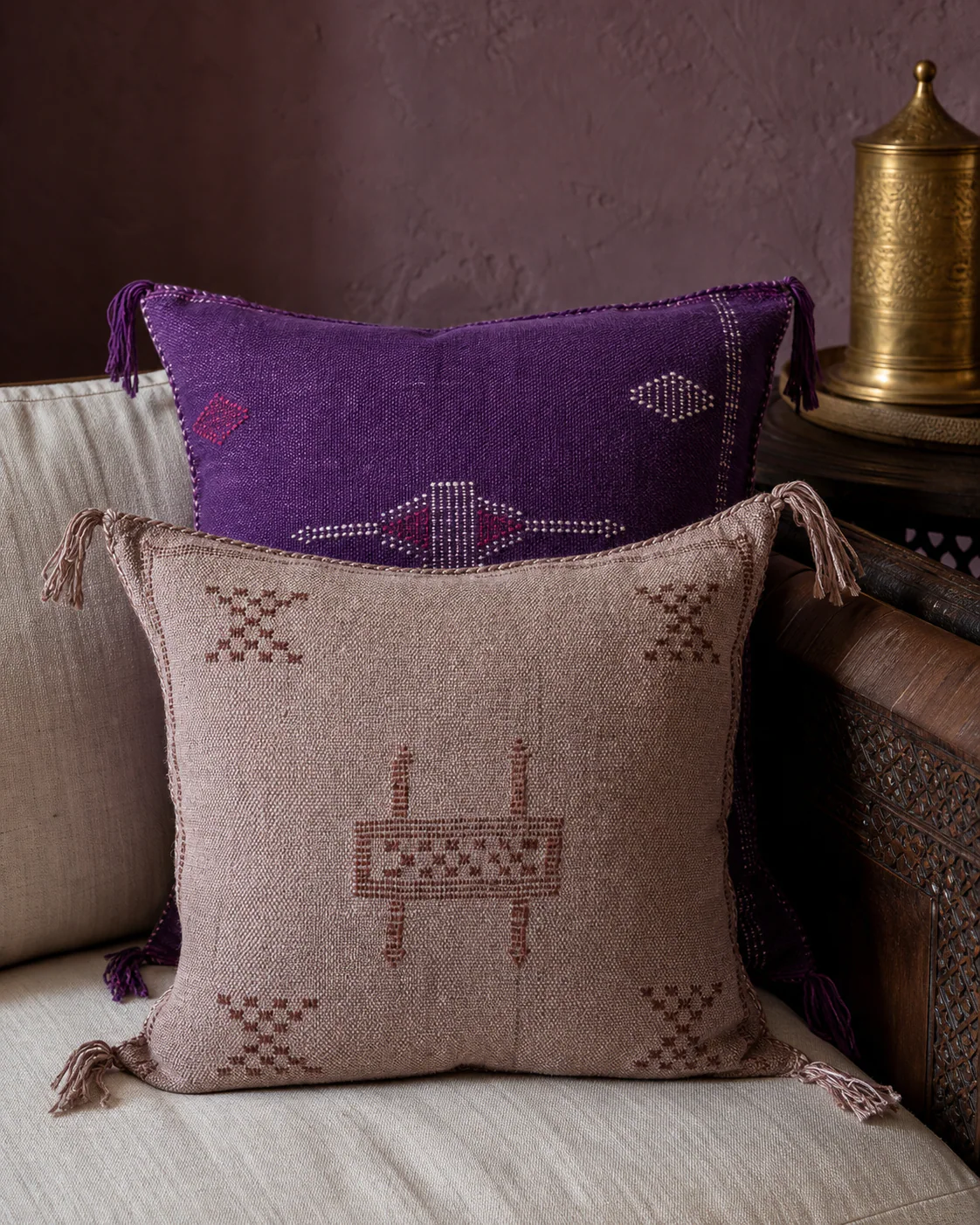
Every collected-looking room has a single piece the eye finds first. In Afrohemian style that anchor is almost always a textile — and a one-of-a-kind handwoven Sabra silk pillow does it with no effort at all. It quietly says gathered, not ordered.

Pick one pillow in a richer accent — rust and indigo are our favorites — give it the center of the sofa, and let everything else fall in behind it. This is the highest-impact, lowest-cost move in the entire guide: you change the mood of a whole room without moving a single piece of furniture.

Shop our handwoven Sabra silk pillows →

6. Choose Natural Materials and Honest Furniture

Afrohemian furniture sits low, leans organic, and wears a little age proudly. Reach for rattan, cane, aged wood, and woven fibers, and favor low-slung seating — a mid-century sofa on wooden legs, a hand-carved bench, a leather pouf pulled up as a footrest. Mix vintage with new so the room feels traveled, not delivered.

A distressed wooden coffee table, a secondhand carved side table, a reupholstered armchair: these are the pieces that buy you that “collected over years” feeling no showroom set can. The goal is simple — nothing should look like it arrived on the same truck.

7. Bring the Room to Life With Plants

Plants aren’t optional here — they’re what keeps the whole earthy scheme from feeling staged. Go big and leafy where you can: a fiddle-leaf fig, a rubber plant, a fan of palm. Let hanging plants soften the hard corners and add a little movement.

The detail that ties greenery back to the craft is the container. House your plants in handwoven baskets and clay pots, never plastic — that one choice continues the texture story and keeps everything grounded. A bundle of dried pampas or eucalyptus in a ceramic vase adds the effortless final note.

8. Let the Walls Carry the Heritage

Your walls are where the story gets to speak out loud. Choose pieces with real cultural weight: framed textile art, a mudcloth panel, a carved mask, a handwoven wall hanging, or a cluster of Berber baskets arranged like a gallery. Bold abstract portraits inspired by African art work beautifully too.

The word to hold onto is meaning, not more. One or two intentional pieces will always beat a wall packed with filler. A single length of framed mudcloth, or three woven baskets grouped together, can carry an entire wall and feel deeply, unmistakably personal.

9. Keep the Lighting Warm and Low

Lighting quietly decides the whole mood, and Afrohemian rooms are meant to glow — never to be lit like an office. Skip the cold overhead wash and build warm, layered, low light: table lamps, floor lamps, and pendants with rattan, cane, or woven shades that scatter soft, patterned shadows across the room.

Add a few candles and warm-white bulbs and you’ll feel the space tip from “decorated” to “stay a while.” Daylight by day, low golden light by night — that’s the pairing that finally makes all those earthy tones come alive.

10. Where to Start (If You Change Only One Thing This Week)

After years of styling these rooms, here’s the honest answer: start with your sofa pillows. It is, by a wide margin, the fastest and most affordable way to move a room toward Afrohemian — no painting, no new furniture, no renovation.

Swap a few generic cushions for genuinely handwoven Sabra silk pillows in rust, ochre, or indigo, and the entire room reorganizes itself around them. Every Tigemi pillow is one of one — handwoven from Moroccan cactus silk by the artisan families we work with directly, naturally dyed, $99, and shipped fast by DHL Express. You can test the whole look this week and see your room change before the weekend.

11. Style It Like a Collector, Not a Catalog

The last idea is really a mindset. Afrohemian is the one look you genuinely cannot buy in a single weekend — and that’s the point of it. Build slowly. Choose things that mean something. Trust odd numbers, mixed scales, and small imperfections to do their quiet work. A room that looks gathered over years is a room that ends up feeling like you.

And you don’t need everything on this list at once. One Beni Ourain rug, three Sabra silk pillows, a leafy plant in a woven basket, and warm low light — that alone already reads, unmistakably, as Afrohemian.

Build your Afrohemian living room — shop handwoven Moroccan pillows →

5 Afrohemian Mistakes We See Most Often (and How to Fix Them)

Knowing what not to do shortens the road more than any single idea above:

  1. Buying a whole “set” at once. A matching collection kills the collected feeling instantly. Add pieces over time, from different makers.
  2. Treating it as a color free-for-all. Afrohemian isn’t “every bright color.” It’s a warm, grounded base with one or two disciplined accents.
  3. Skipping real texture. Prints alone fall flat. The look only comes alive when you can physically feel three or more materials in one spot.
  4. Choosing decorative imitations over real craft. Machine-printed “mudcloth” or synthetic “cactus silk” reads as costume. One authentic handwoven piece outweighs ten fakes.
  5. Lighting it like a kitchen. Cold, bright overhead light flattens every earthy tone. Go warm, go low, go layered.

Frequently Asked Questions

What colors are Afrohemian?

Afrohemian palettes are warm and earthy: terracotta, ochre, rust, saffron, clay, olive, and cream as the base, with richer accent tones like deep indigo, plum, burnt crimson, and emerald. Start with a neutral, grounded canvas and add just one or two bold accents so they feel intentional rather than busy.

How do you mix African prints without it looking busy?

Stay in one color story and vary the scale. Pair a large geometric motif like mudcloth with a thin stripe and a solid, keeping all three in the same tonal family. Use odd numbers, mix pillow sizes, and let patterns complement rather than match. Shared color is what makes a bold mix read as deliberate.

What is the difference between bohemian and Afrohemian style?

Bohemian style is eclectic and free-spirited but borrows from many global sources. Afrohemian narrows that energy specifically to African and Amazigh (Berber) craft — mudcloth, Kente, Sabra silk, Beni Ourain rugs, carved wood, and natural fibers — giving the boho look deeper cultural roots and a warmer, more grounded, earth-toned feel.

What is Sabra silk, and is it real silk?

Sabra silk, also called cactus silk, is a plant-based fiber handwoven in Morocco from the agave cactus. It is not animal silk — it’s vegan — but it has a soft luster, earthy strength, and rich natural dyes that make it a favorite for Afrohemian pillows and textiles.

How can I get the Afrohemian look on a budget?

Start with textiles, not furniture. A few handwoven pillows, one Beni Ourain-style rug, a leafy plant in a woven basket, and warmer lighting will shift a room dramatically for a fraction of the cost of new furniture. Pillows are the highest-impact, lowest-cost place to begin.

Is Afrohemian still a trend in 2026?

Yes. Afrohemian was named a top Pinterest interior trend for 2026, with related searches rising sharply year over year. Because it’s rooted in genuine craft and heritage rather than a passing aesthetic, it has the staying power of a lasting style, not a fleeting fad.


About Tigemi — Our Craft

Tigemi is a Moroccan atelier devoted to authentic handwoven Sabra (cactus) silk. We work directly with artisan families across the Atlas Mountains and the weaving towns of Taznakht and Fès, helping keep generations-old weaving and natural-dye traditions alive. Every piece we make is genuinely one of a kind — woven by hand, dyed with natural pigment, never mass-produced. We write about Afrohemian and Moroccan decor not as outside observers, but as the makers of the very textiles that define the look. Handwoven in Morocco. Felt everywhere.

The Afrohemian palette, decoded

Once you understand that Afrohemian is really a conversation between earthy neutrals and a single soulful accent, building a room becomes far less intimidating. Pick one palette as your base, commit to it across the largest surfaces, and let a single hero textile carry the accent.

Palette Colors Mood Pairs with
Sunbaked Medina Terracotta, saffron, cream, cinnamon Warm, golden, welcoming A rust or burnt-orange hero pillow
Atlas Earth Olive, sand, taupe, aged wood brown Grounded, calm, quietly rich A mustard or olive sabra silk cushion
Indigo Dusk Cream, charcoal, deep indigo, brass Moody, collected, after-dark An indigo or midnight-blue pillow
Plum & Clay Oatmeal, clay, plum, soft ochre Jewel-toned but restrained An amethyst or plum hero pillow
Desert Rose Ivory, blush, dusty rose, cumin Soft, romantic, sun-faded A rose or faded-pink sabra silk cover

Find the hero pillow your palette is missing →

The Afrohemian styling formula

Afrohemian looks effortless because it follows a few quiet rules underneath the ease. Ground first: let warm neutrals own roughly two-thirds of the room so the eye has somewhere to rest. Accent second: reserve your saturated color for textiles, where it is reversible and low-risk. Layer in odd numbers: three or five pillows on a sofa always read more collected than two or four. Mix scale deliberately: pair a generous 18×18″ square with a slim lumbar and let the sizes step down, never match. And mix texture across at least three registers – the sheen of handwoven sabra silk against nubby wool against something raw like rattan or aged leather. When a room feels flat, it is almost never the color that is wrong; it is that everything sits at the same texture and the same scale.

How to layer it on a sofa, step by step

Anchor each corner with a larger solid pillow in your base neutral, bring your patterned hero pillow slightly off-center, then tuck one smaller textured or tasseled cushion in front to break the line. Keep all the patterns inside one color story and let one piece be the loudest. For the wider room, our Moroccan home decor guide walks through rugs, lighting, and room-by-room layering.

Frequently asked questions

What is Afrohemian style?

Afrohemian is a 2026 decor mood that marries African and Amazigh (Berber) craft with relaxed bohemian comfort. It leans on earthy color, real handmade texture, and slow, collected-over-time layering – the warm, soulful answer to cool minimalism.

What colors work best in an Afrohemian living room?

Build on warm neutrals – terracotta, saffron, cream, olive, cinnamon – then let one or two richer notes like plum, ochre, or deep indigo carry the accent. A neutral base keeps the bolder tones feeling intentional rather than busy.

How many throw pillows should I use on a sofa?

Style in odd numbers. Three pillows suit a loveseat or compact sofa; five work on a larger three-seater. Odd groupings and mixed sizes read as collected, while pairs and perfect symmetry tend to look catalog-flat.

Can I get the Afrohemian look without redecorating?

Yes – and it is the smartest place to start. Swapping your sofa pillows shifts a room toward Afrohemian faster and more affordably than any big-furniture change. One genuinely handmade, one-of-one cactus silk pillow does more for the mood than a whole new sofa.

What makes a pillow feel authentically Afrohemian rather than generic boho?

It comes down to the maker’s hand. A truly handwoven sabra silk pillow carries real Berber motifs, natural dye variation, and a sun-washed finish that printed lookalikes cannot fake. That visible evidence of craft is what gives an Afrohemian room its soul.

Shop one-of-one handwoven cactus silk pillows – $99, free fast worldwide shipping →

Join the conversation.

Your email address will not be published. Required fields are marked *