FREE U.S. SHIPPING · DHL EXPRESS DELIVERY
ARTISAN-MADE IN MOROCCO · LIMITED COLLECTIONS
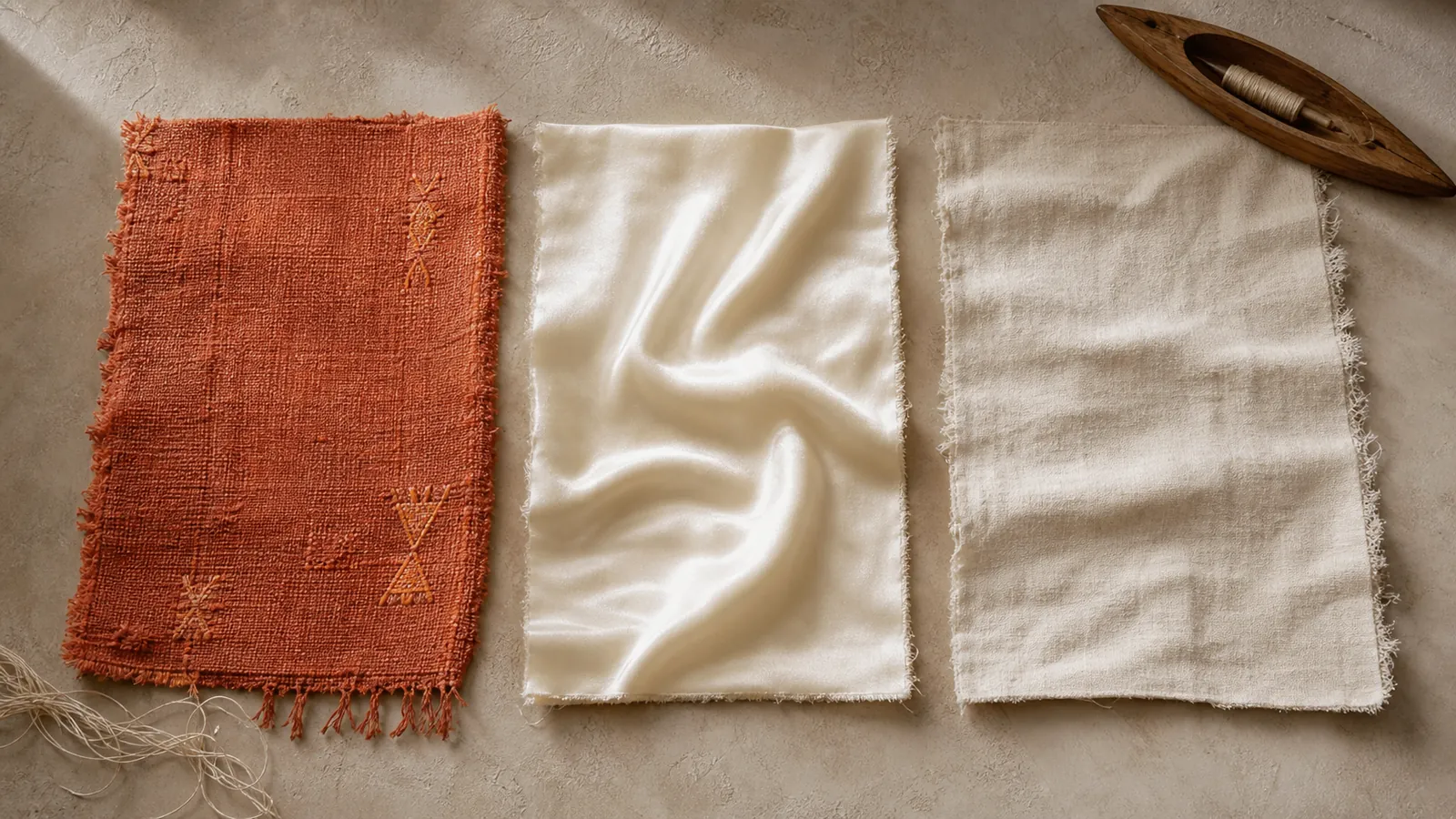
Is sabra silk real silk? We compare Moroccan cactus silk vs. mulberry silk vs. cotton — texture, durability, ethics, and price — so you can buy with confidence.
If you have ever run your hand over a Moroccan throw pillow and felt that soft, low sheen, you have probably asked the obvious question: is sabra silk actually silk? The honest answer is no, and that turns out to be the most interesting thing about it. Here is a straight, side-by-side look at sabra (cactus) silk against real silk and against cotton, so you know exactly what you are paying for.
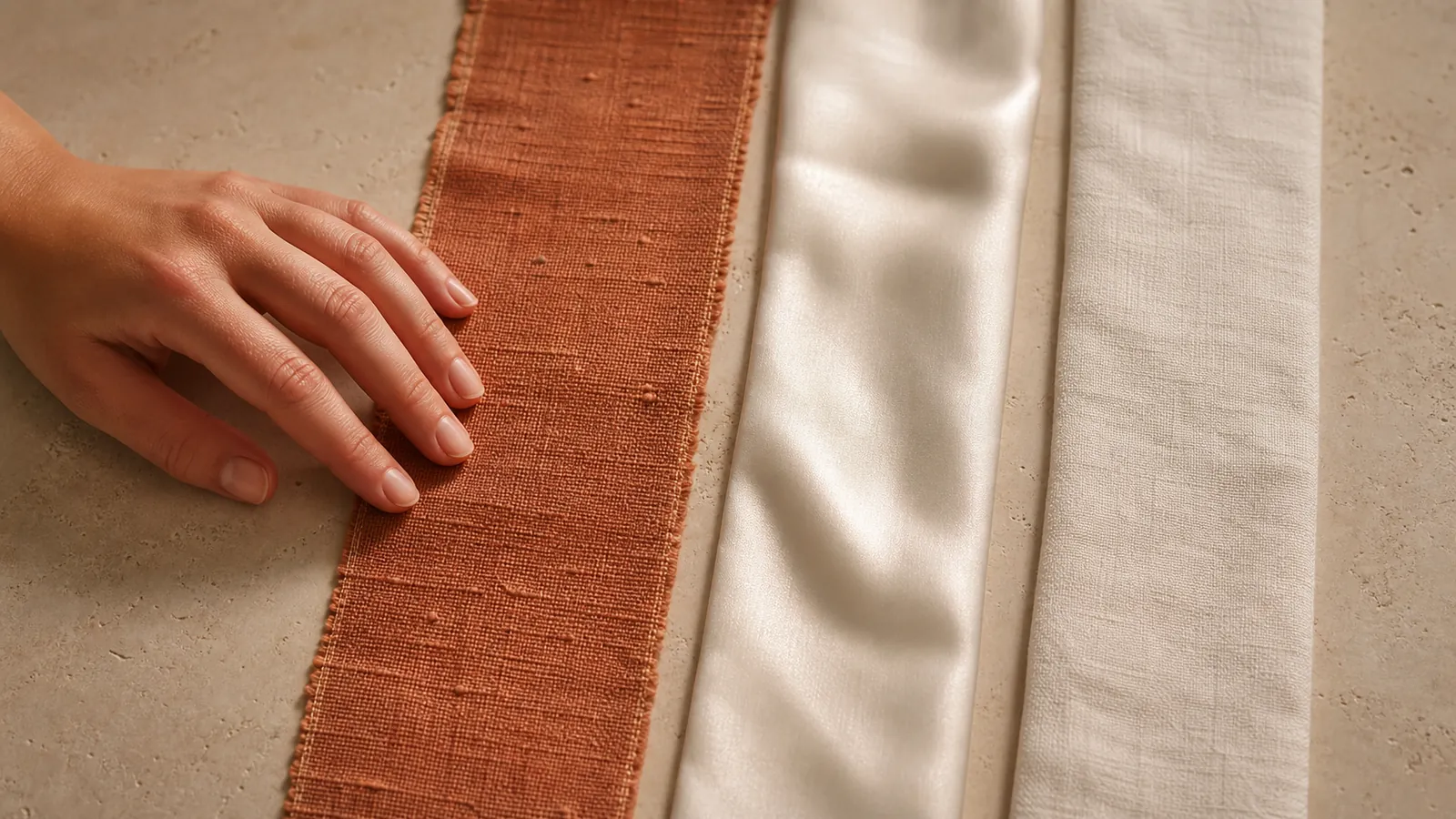
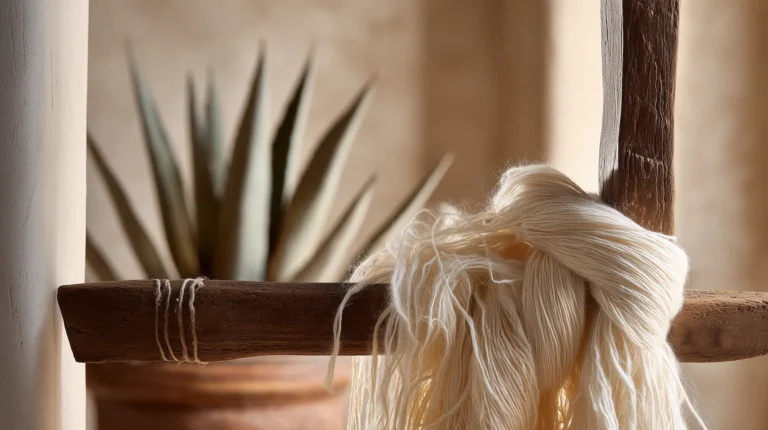
The name is a lovely bit of marketing. No silkworms are involved anywhere. Sabra silk is hand-spun from the fibers of the agave cactus that grows across the Atlas Mountains in Morocco. Artisans extract the plant fibers, dry and spin them, dye them with natural pigments like saffron, henna, and indigo, then weave them on traditional looms. What comes off the loom has the luster of silk but a grounded, organic texture that is unmistakably its own thing. If you want the deeper story, we covered it in our complete guide to sabra silk.
Real mulberry silk is genuinely luxurious, but it is also high-maintenance, often dry-clean-only, and it relies on silkworms. Sabra silk is entirely plant-based and vegan, noticeably more durable for everyday use, and it tends to develop character over the years rather than looking tired. If your only metric is pure softness, mulberry silk edges ahead. On durability, ethics, and one-of-a-kind character, sabra silk wins comfortably.
Cotton is cheap and easy to wash, but it reads flat. It simply does not have the sheen or the hand-woven depth that makes a pillow look collected rather than bought. Sabra silk costs more for a straightforward reason: every piece is made by hand and never repeated. Put plainly, a mass-printed boho cotton cover is a decoration, while a handwoven sabra silk pillow is closer to a small heirloom.
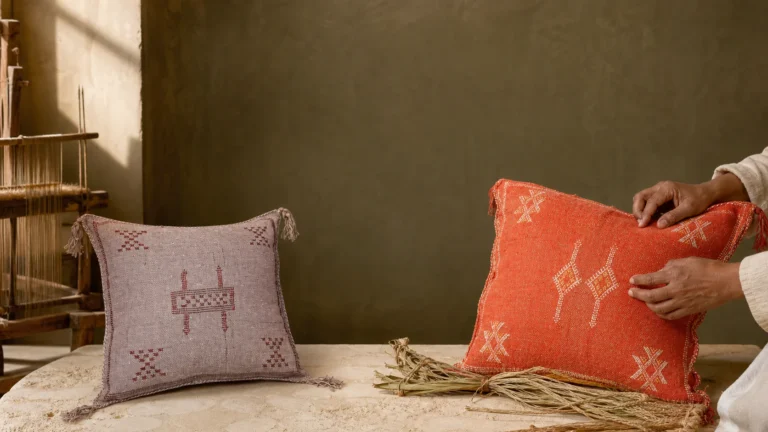
Each of our pillows is one of one, handwoven by named Amazigh artisan communities, dyed naturally, and finished with hand-knotted tassels. The launch price is $99 and rising soon, it ships fast by DHL Express, and it is backed by a money-back guarantee. For a unique, handmade textile, that is honest value. See the collection →
Three signals give it away. Look for subtle irregularities in the weave, since handmade cloth is never machine-perfect. Look for natural-dye color that varies gently across the surface instead of a flat printed tone. And look for a real maker story tied to a region; ours come from the Atlas Mountains and Tazenakht.
Is sabra silk real silk? No. It is vegan cactus (agave) fiber that simply looks and feels silk-like.
Is it durable? Yes, noticeably more so than mulberry silk for everyday use.
How do I care for it? We walk through it step by step in our cactus silk care guide.
Shop handmade Moroccan cactus silk pillows — $99, one of one →
It is one thing to read that sabra silk sits between real silk and cotton; it is another to see the trade-offs laid out plainly. Here is how the three fibers actually compare on the things that matter when you are choosing a textile you will live with every day.
| Quality | Sabra (cactus) silk | Mulberry silk | Cotton |
|---|---|---|---|
| Fiber source | Agave plant fiber (woven in the Sabra tradition) | Silkworm cocoons | Cotton plant boll |
| Sheen | Soft, low, liquid luster | High, uniform gloss | Flat, matte |
| Texture | Organic, slubbed, characterful | Smooth and slippery | Even and plain |
| Durability for daily use | High – built for living rooms | Delicate, snags easily | High but ages flat |
| Care | Dry care only; natural dyes are not waterfast | Usually dry-clean only | Machine washable |
| Vegan | Yes – plant-based | No | Yes |
| Each piece | One of one, handwoven | Mass-produced | Mass-produced |
The character you feel in a true Sabra-tradition textile comes from how the fiber is made, not from a finishing chemical sprayed on at the end. Long strands are drawn from the agave plant, retted and cleaned, then hand-spun into a thread that keeps slight variation along its length. That uneven thread is exactly what gives the woven cloth its broken, light-catching sheen. Mulberry silk, by contrast, is a continuous filament unwound from a cocoon, which is why it is so uniformly smooth and so easily snagged. Cotton is a short, matte staple fiber with no luster to give. This is also how you learn to identify quality: genuine agave-fiber cloth has irregularity you can see and a hand you can feel, while a polyester imitation is perfectly even and slightly plasticky to the touch.
Yes. It is drawn from the agave plant rather than from silkworms, so no animals are involved at any stage. That is one of the clearest practical differences between it and mulberry silk.
It is not always cheaper by the yard, but a finished cactus silk pillow can cost less than fine mulberry silk because the agave plant is abundant in Morocco and the value lives in the hand-weaving rather than in a rare raw material. You are paying for craft and one-of-one design, not scarcity of fiber.
On pure slip-through-your-fingers softness, mulberry silk wins. Sabra silk trades a little of that slipperiness for a grounded, textured hand and far better everyday durability – which is usually what you want in a throw pillow that gets leaned on.
No. Cotton shrugs off the washing machine; sabra silk does not. Its natural botanical dyes are not waterfast, so water can move the color. Keep care dry, and see our cactus silk care guide for the full routine.
Look for visible weave irregularity, a soft low sheen that shifts as you move, and natural-dye color that varies gently across the surface. A flat, identical, slightly shiny print is the synthetic tell. Our authenticity buying guide walks through every signal.