
FREE U.S. SHIPPING · DHL EXPRESS DELIVERY
ARTISAN-MADE IN MOROCCO · LIMITED COLLECTIONS
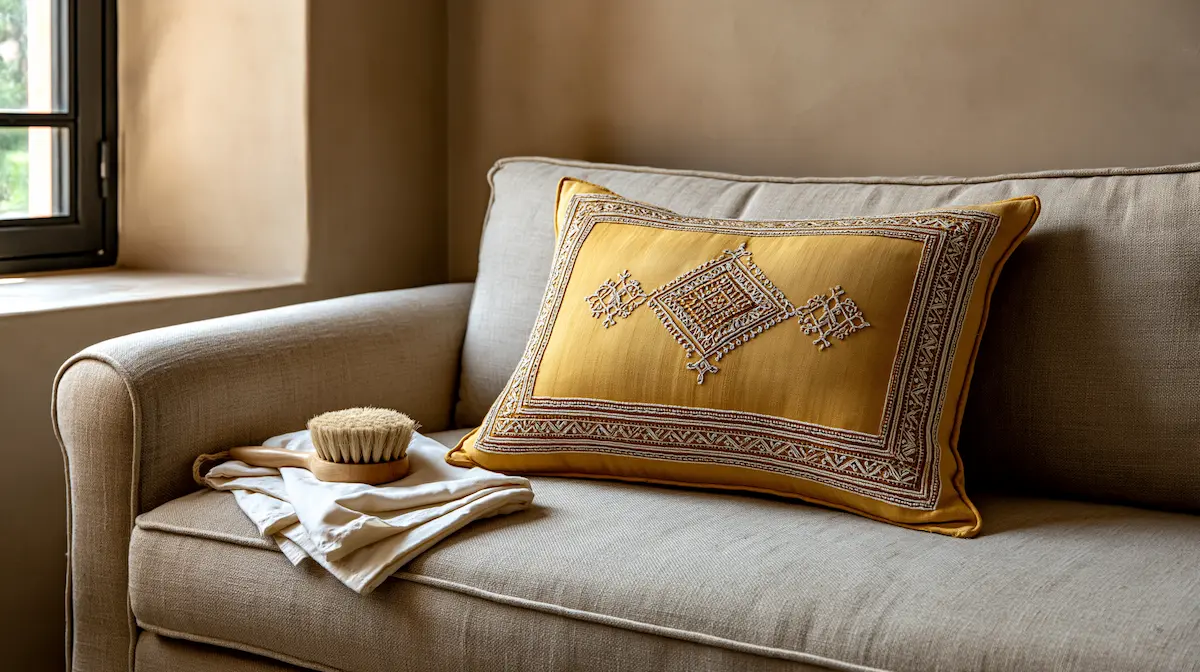
Everything you need to know about cleaning and maintaining your Moroccan cactus silk (sabra) pillows without damaging the natural dyes.
How to care for cactus silk pillows is simpler than it sounds: keep water away, treat spills immediately, and protect the natural dyes from harsh sun. If you’ve just brought home a cactus silk pillow — or you’re eyeing one and wondering how much of a hassle it’ll be to look after — here’s the short version: it’s genuinely easy to care for, as long as you understand one thing about it. These covers aren’t fussy. They just play by different rules than the throw pillows you’re used to.
I’ll answer the question almost everyone asks first (can you wash it?), then walk through exactly how to keep one clean, what to do the moment you spill something, how to stop the colors fading, and the small handling habits that make a cover last for years. No jargon, no scare tactics — just what actually works. If you are still choosing a piece, start with our authentic Moroccan cactus silk pillow checklist.
Not the way you’d wash a normal pillowcase — and this is the single most important thing to know. Cactus silk (sabra silk) is dyed with natural, plant-based pigments, and those dyes are not waterfast. Soak the fabric or run it through a machine and the color can bleed, the dye can run onto whatever it’s touching, and you can be left with watermarks and a stiffer, less silky drape.
So the rule is simple: treat water as the enemy. No machine wash, no hand wash in the sink, no soaking. If a cover ever needs a real, all-over clean, that’s a job for a professional dry cleaner — more on that below. The good news is that day to day, these pillows need far less cleaning than you’d think.

It helps to know what you’re working with. The fiber is drawn from the agave plant, spun into thread, and woven by hand in Morocco. The colors come from botanicals — things like indigo for blue, madder root for red, saffron and henna for the warm tones — and the fabric is often sun-dried, which is what gives it that soft, slightly faded, lived-in look.
Because none of that involves the chemical fixatives used in mass-produced textiles, the color sits in the fiber more loosely. That’s exactly why the pillow looks so rich and organic — and also why water can move the dye around. The thing that makes it beautiful is the same thing that makes it water-shy.

Ninety percent of cactus silk care is just keeping dust out of the weave. Give the pillow a good shake every week or so, and once in a while run a vacuum over it using the upholstery attachment on low suction. Keep the suction gentle so you’re lifting dust off the surface, not tugging at the handwoven threads or the corner tassels.
Dropped something dry — crumbs, dust, a bit of dirt? Just brush it off or vacuum it. For most marks, a soft dry brush is all you need, and it’s completely safe.
Don’t panic, but do move quickly. Blot, don’t rub — press a clean, dry cloth onto the spill to soak up as much as you can. Rubbing pushes liquid deeper into the weave and can drag the dye. If a mark remains after blotting, the safest next step is a solvent-based (dry) cleaning product dabbed on with a clean cloth — and always test it on a hidden spot, like the back corner near the zipper, before you touch the visible front.
When a cover genuinely needs an all-over refresh, take it to a professional dry cleaner and tell them exactly what it is: handwoven agave (cactus) silk, dyed with natural, non-waterfast botanical dyes. That last detail matters — it tells them to use a water-free solvent process that protects both the color and the texture. A good dry cleaner handles this kind of delicate, naturally-dyed fabric all the time.

The other thing people worry about is fading, and there’s an easy way to manage it. Natural dyes will soften over time in strong, direct sunlight — that’s just the nature of botanical color. A little fading actually adds to the vintage charm, but if you’d rather slow it down:

A few small habits keep a cover looking its best far longer:

Not with water. No machine or hand washing. Clean it dry — shake, vacuum, blot spills — and use professional dry cleaning for a full refresh.
The natural dye can bleed and leave a watermark, and the fabric may stiffen. If it does get wet, blot (never rub) immediately with a dry cloth and let it air dry away from direct heat and sun.
Honestly, no — it’s lower-maintenance than most people expect. As long as you keep it dry, a quick shake and occasional vacuum is nearly all it ever needs.
Cactus silk pillows are handmade pieces of art, and they reward a little awareness rather than a lot of effort. Keep them dry, vacuum them gently, blot spills the moment they happen, and call in a dry cleaner for the rare deep clean. Do that, and your sabra silk will stay vibrant and beautifully textured for many years.

Shop the authentic Tigemi sabra silk pillow collection and bring a piece of Moroccan heritage into your space →
Everything in this guide comes down to a handful of habits. Here it is as a quick reference you can keep in mind the next time something spills or you are deciding where a pillow should live.
| Situation | Do | Don’t |
|---|---|---|
| Routine cleaning | Shake weekly; vacuum on low with upholstery head | Machine or hand wash |
| A liquid spill | Blot immediately with a dry cloth | Rub, scrub, or soak |
| A stubborn mark | Dab a solvent (dry) cleaner, testing a hidden corner first | Reach for water or bleach |
| A full clean | Professional dry cleaning only | Home washing of any kind |
| Fading | Keep out of harsh direct sun; rotate covers | Leave in an all-day sunbeam |
| Drying after damp | Air dry, flat, away from heat | Tumble dry or use a hair dryer |
| Tassels and seams | Handle gently; ease the insert in | Pull or hang by the tassels |
Beyond reacting to spills, a light seasonal routine keeps a sabra silk cover looking its best for years with almost no effort. Every week, give it a shake to keep dust from settling into the weave. Once a month, run the upholstery attachment over it on low suction and rotate it so any gentle fading and wear stays even across the face. Each season, inspect the hand-knotted corners and any embroidery, easing loose threads back into place rather than trimming them, and refresh or rotate the down insert so the cover keeps its plump drape. Store off-season covers folded loosely in a breathable cotton bag – never sealed plastic, which traps moisture against natural dyes – somewhere cool, dry, and out of direct light.
Act fast and blot – press a clean, dry cloth straight down to lift as much liquid as you can, and never rub. If a mark remains once it is dry, dab a solvent-based dry cleaning product, testing first on a hidden back corner near the zipper.
Be cautious. Steam is moisture, and moisture can move these non-waterfast natural dyes. If a cover needs relaxing, a brief shake and gentle hand-smoothing is safer; for anything more, a professional dry cleaner is the right call.
Avoid a hot iron directly on the fabric. Most creases relax once the cover is on a plump insert. If you must, use the lowest setting through a dry pressing cloth and keep moving – but when in doubt, leave it to a dry cleaner.
Gentle fading over time is completely normal for naturally dyed cloth and is part of its lived-in charm – not a defect. You can slow it by keeping pillows out of harsh direct sun and rotating them every few weeks.
Our $99 price is for the 18×18″ cover only; the insert is not included. Choose an insert 1-2 inches larger than the cover, in down or down-alternative fill, for that full, softly slouchy drape that shows the weave off best.
No. Sun and moisture are the two things natural dyes and agave fiber like least, so keep these covers indoors. They are made to be lived with on a sofa or bed, not weathered on a patio.