FREE U.S. SHIPPING · DHL EXPRESS DELIVERY
ARTISAN-MADE IN MOROCCO · LIMITED COLLECTIONS
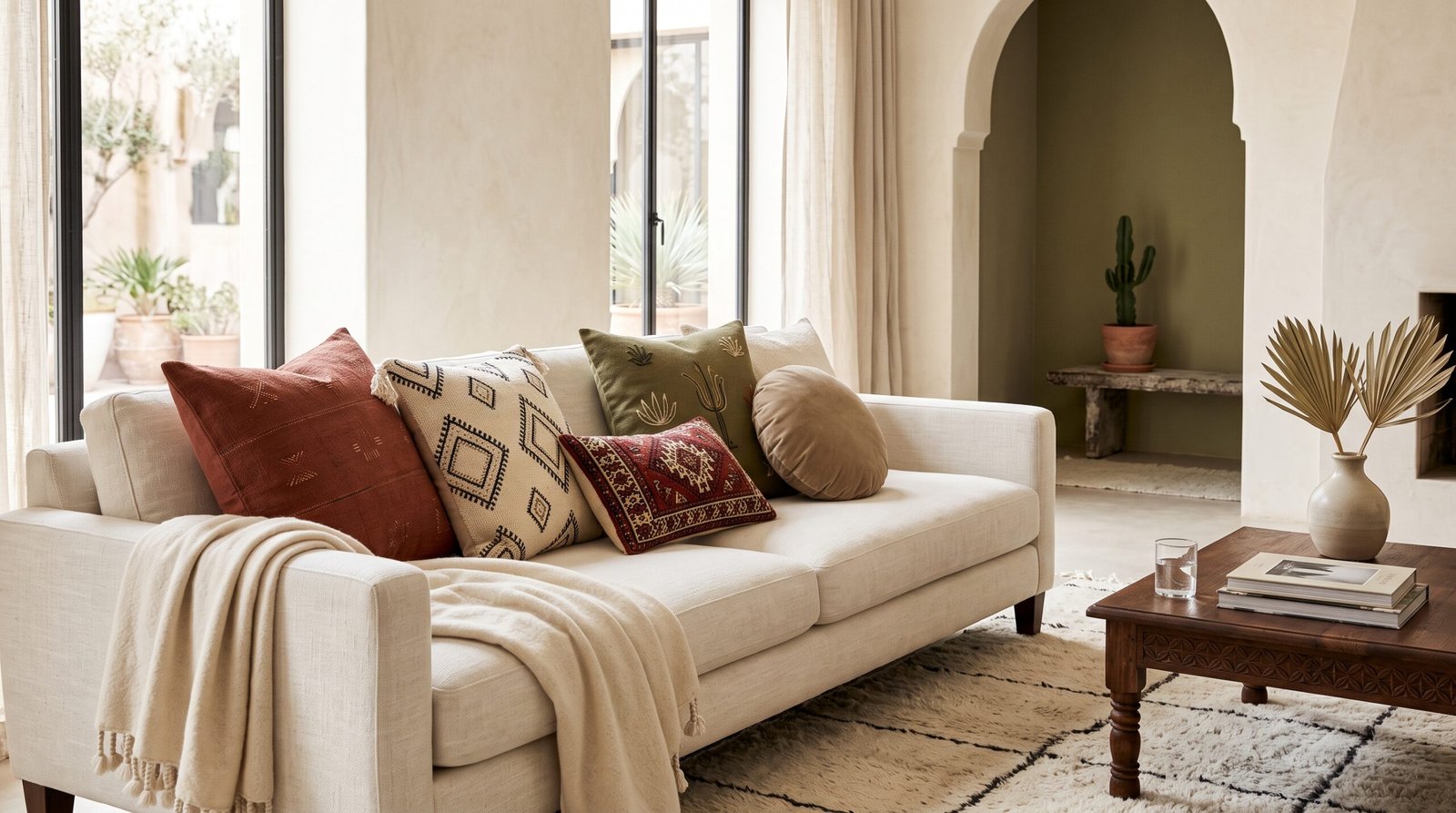
Learn how to style Moroccan throw pillows using balanced colors, varied patterns, practical sizing, and comfortable arrangements for sofas, beds, chairs, and benches.
Moroccan throw pillows can introduce color, texture, and pattern without requiring a major change to your home decor. The key is to make the arrangement serve the room rather than simply adding more decorative objects. Before styling, decide whether you want the pillows to blend in or create contrast, which pillow will be the focal point, and how much seating space must remain open for everyday use.
This guide is published by Tigemi, which sells one-of-a-kind Moroccan Sabra silk throw pillows. The styling principles below are editorial guidance that can be applied to Moroccan pillows from any source. Before purchasing, inserting, cleaning, or altering a cover, verify its materials, measurements, construction, and care instructions on the individual product page or attached label.
A successful arrangement is easier to build when you answer four practical questions before choosing individual pillows:
These decisions create useful boundaries. Instead of buying several attractive pillows and hoping they work together, you can evaluate every piece according to a clear role.
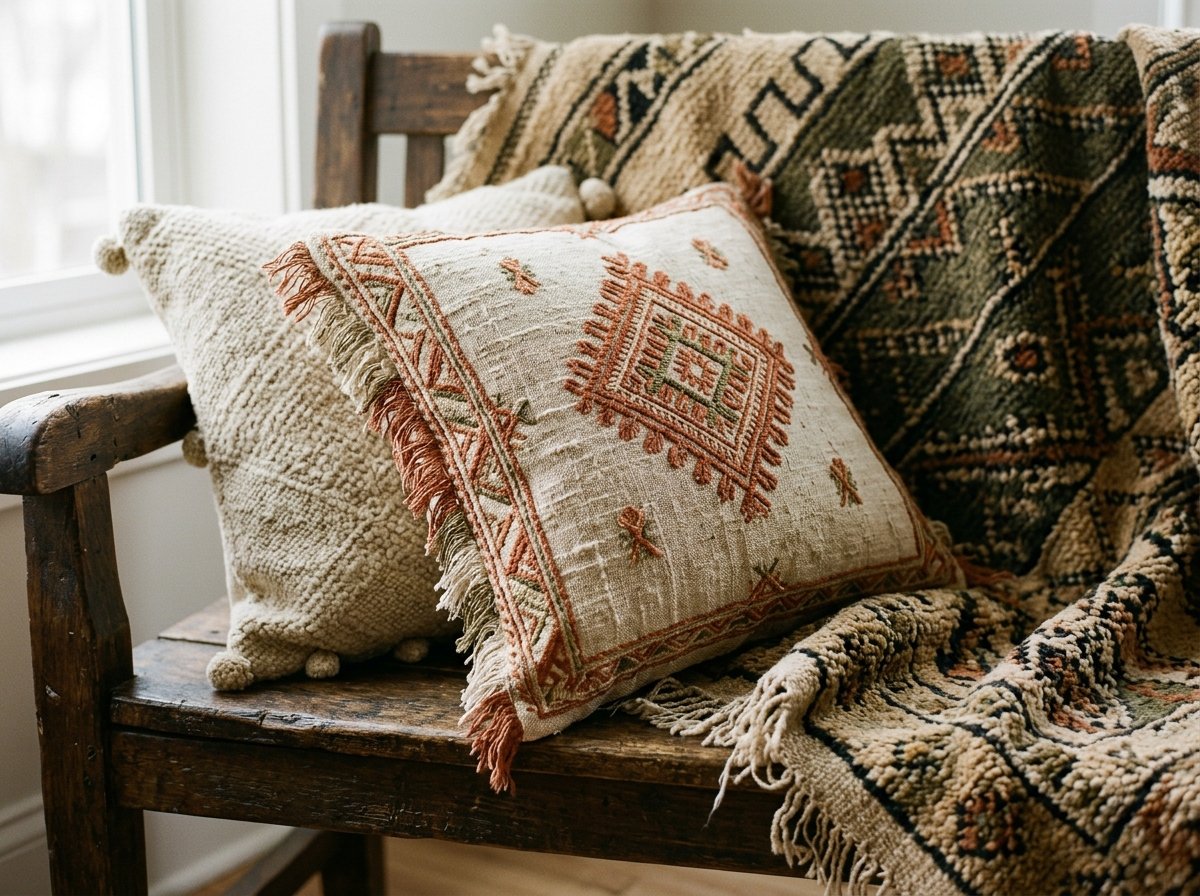
Look beyond the sofa or bed. Identify the dominant and secondary colors in the rug, curtains, walls, artwork, wood finishes, lighting, and nearby decorative objects. Your Moroccan throw pillows do not need to match these elements exactly, but they should have a visual relationship with at least one of them.
For a calm, collected look, repeat colors that are already present. A terracotta pillow could relate to warm wood, pottery, leather, or a rust detail in a rug. An ivory-and-brown design might connect a cream sofa with a dark wood coffee table.
Use related shades rather than searching for an exact color match. Sand, oatmeal, ivory, and warm white can work together because they belong to a similar family. Slight variation often gives a room more depth than a perfectly matched set.
Contrast makes a pillow more prominent. Indigo can stand out against cream upholstery, ochre can brighten charcoal, and warm red can add energy to muted green or blue. If you introduce a color that appears nowhere else, repeat it once in a small way through a throw, vase, book, bowl, or artwork detail. The repetition should support the accent rather than turn the room into a themed color scheme.
If the room already has a detailed rug, patterned curtains, or wallpaper, give those elements room to lead. Choose Moroccan pillows with restrained motifs, tonal weaving, narrow stripes, or quieter color combinations.
In a room with solid upholstery and simple walls, the pillows can carry more visual detail. Geometric motifs, embroidery, fringe, and stronger color combinations are easier to appreciate when the surrounding surfaces are relatively calm.
Do not use a collection name, including “Sabra silk,” as a substitute for an item-specific material disclosure. If fiber content, backing material, dyes, construction, or cleaning requirements affect your decision, review the individual listing and any attached label. Ask the seller or maker when important information is missing.
Before styling or purchasing an insert, check:
These details are especially important when coordinating one-of-a-kind covers. Two pillows that look similar in a photograph may have different proportions, backing materials, or insert needs.
Pillow size should respond to the width, seat depth, back height, and arm style of the furniture. Suggested dimensions are starting points rather than fixed rules.
Measure the cover from seam to seam when accurate sizing matters. Do not include fringe or tassels unless the product description specifically includes them in the listed dimensions.
An insert should fill the corners and create the profile you want without placing unnecessary pressure on the seams or closure. Depending on the cover’s construction, the appropriate insert may match the cover dimensions or be slightly larger. Follow item-specific guidance when available, and never force an insert through a narrow opening.
Compare inserts by firmness, resilience, and intended use rather than relying only on the fill name. A decorative bench pillow may benefit from a defined outline, while a pillow used for lounging may need a softer, more flexible profile. After inserting it, check for strained seams, empty corners, and excessive thickness.
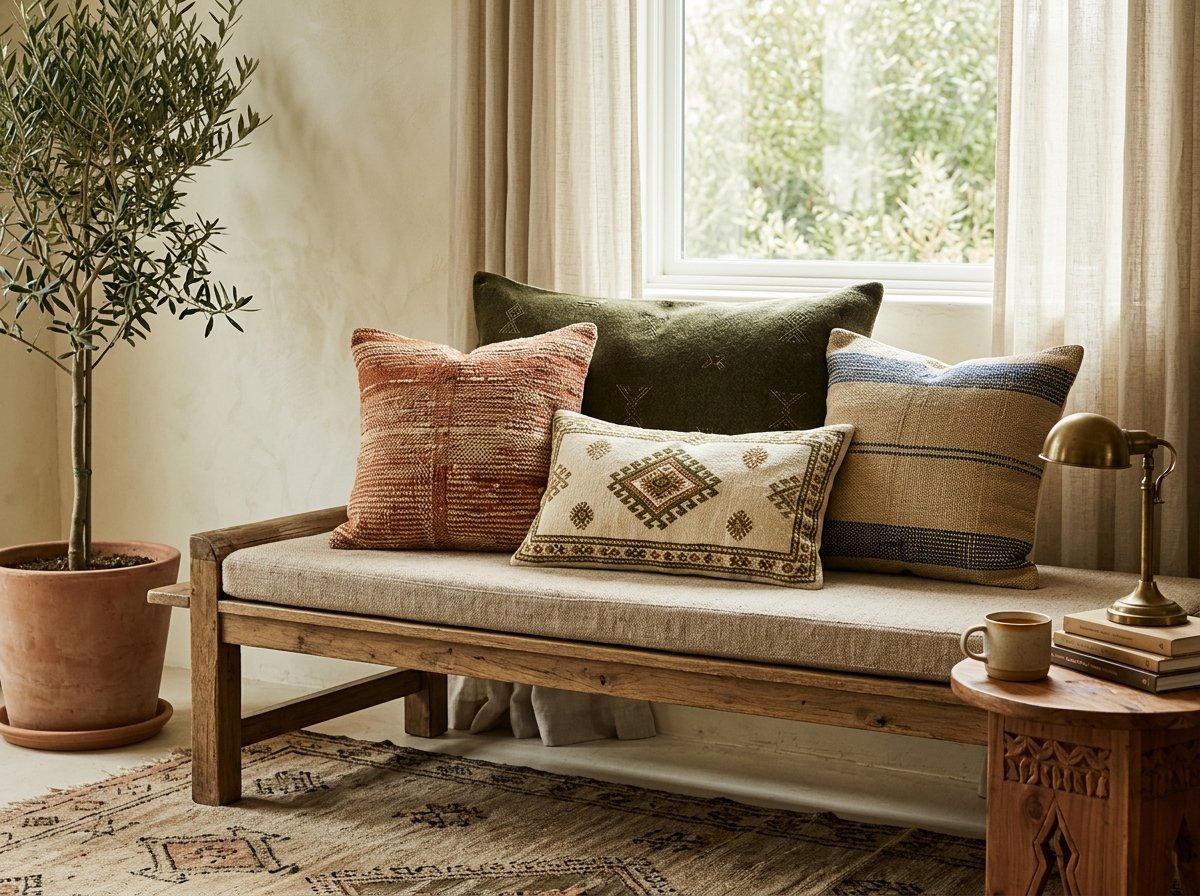
Pattern mixing becomes easier when each pillow has a distinct role. Use one focal design, one supporting pattern, and one quiet surface.
Select two or three main colors from the room and use them as a filter. Every pillow does not need to contain every color, but neighboring pieces should share at least one recognizable tone.
For example, pair a terracotta focal pillow with a cream-and-rust stripe and a sand-colored textured cushion. Each surface is different, but the repeated warm colors make the group feel connected.
A supporting pillow does not have to be completely plain. Tonal weaving, raised stitching, subtle embroidery, and natural-looking variation can provide depth without introducing another dominant motif.
Consider how textured details interact with the furniture. Delicate trim is better placed away from exposed hardware, rough upholstery, or the part of the sofa that receives the most frequent contact. If pets or young children use the room, reserve fragile pieces for lower-friction locations.
Three to five pillows are a useful starting point for many three-seat sofas. Place the largest pillows at the outer corners, add one or two smaller pieces in front, and position a focal lumbar or patterned square near the center or slightly off-center.
For a more formal arrangement, repeat similar sizes and colors on both sides. For a relaxed look, balance visual weight rather than creating exact symmetry. A dark patterned square on one side might be balanced by a lighter lumbar and smaller textured pillow on the other.
One practical five-pillow sequence is:
A loveseat often needs only one to three pillows. Use one distinctive lumbar pillow for a minimal arrangement, or place a medium square in one corner with a smaller accent in front. If two people regularly use the loveseat, keep the center and most of the seat depth open.
Treat a sectional as connected zones rather than one continuous surface. Create a small cluster at the interior corner, add a pillow or second cluster at an outer end, and leave open seating between the groups.
Avoid spacing identical pillows at equal intervals across the entire sectional. Grouping them into distinct clusters generally creates a more purposeful sofa pillow arrangement and makes the seating easier to use.
One appropriately scaled pillow is usually enough for an accent chair. A square pillow can suit a wide, deep chair, while a lumbar shape may preserve more space on a narrow seat. Always test the chair while seated; a pillow that looks proportional from across the room may still feel too thick in use.
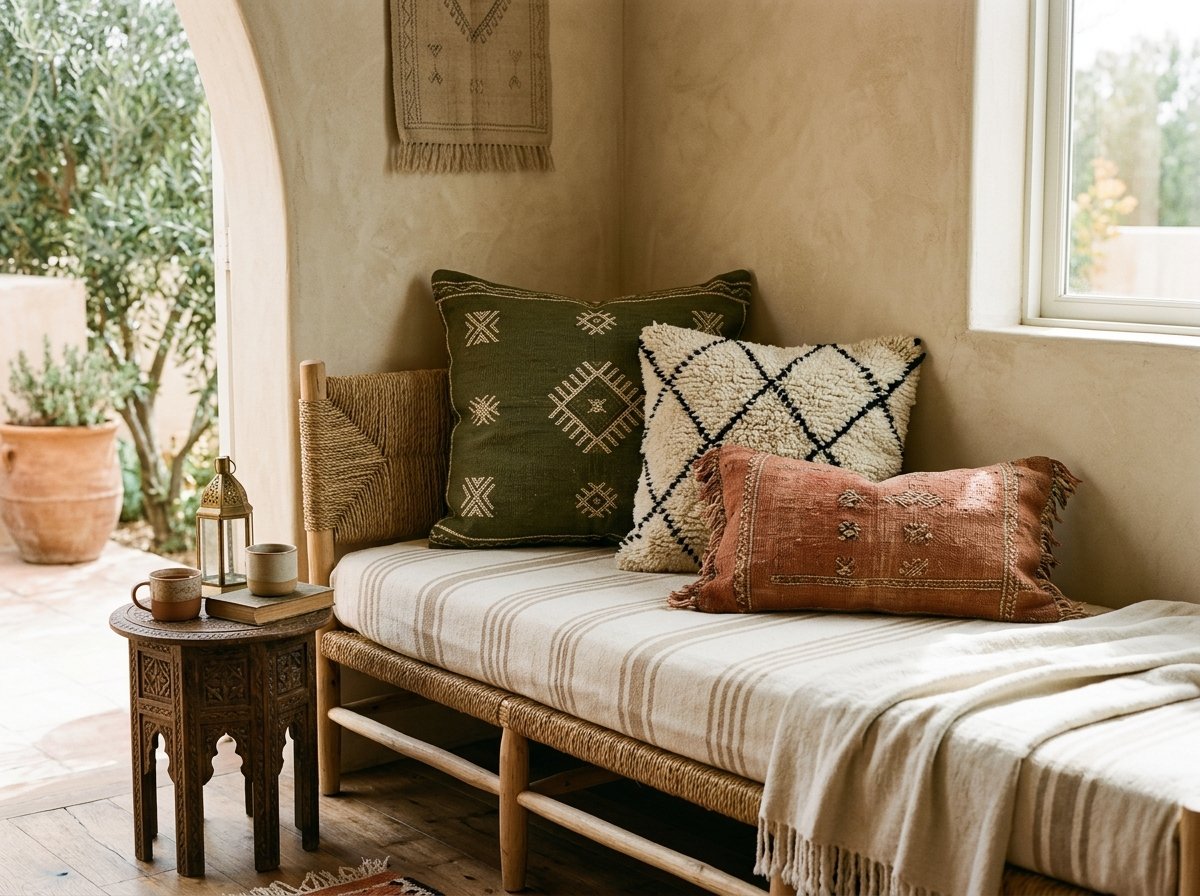
Place one focal pillow to the side for an uncluttered look. On a longer bench, group a square and lumbar pillow at one end rather than covering the full back. This creates a styled area while leaving room to sit or set down a bag.
Build from functional pillows at the back to decorative pieces at the front. A straightforward arrangement can include sleeping pillows, two decorative shams, and one Moroccan lumbar pillow. If you want more color, add one patterned square rather than another complete row.
Before expanding the arrangement, decide where the decorative pillows will go at night. A simpler bed is often easier to maintain than one that requires moving and storing a large stack every day.
Matching pairs are not required for polished home decor. One-of-a-kind Moroccan throw pillows can be coordinated through color, pattern scale, shape, or visual weight.
Start by placing the strongest pillow. Select supporting pieces that repeat one or two of its colors without duplicating its motif. If the focal design contains dense geometry, surround it with smaller patterns and tonal textures. If the focal pillow is relatively quiet, a striped or embroidered companion can add contrast.
When covers have different dimensions, use intentional asymmetry instead of forcing two identical sides. One dark, densely patterned square can balance a lighter lumbar and a small textured pillow at the opposite end. Step back and compare the total visual weight of each group rather than counting pillows.
Cleaning requirements depend on the verified fibers, dyes, backing, stitching, trim, and construction of the individual cover. Use its attached label and product-specific instructions as the primary guide.
Effective throw pillow styling is less about following a fixed formula and more about making deliberate choices. Read the room first, control the color palette, vary pattern scale, and let one textile lead. Adapt the number and size of the pillows to the furniture instead of filling every available space.
A single Moroccan throw pillow may be enough for a chair, bench, bed, or restrained sofa. Larger seating can support a layered arrangement, provided that the pillows remain comfortable and easy to manage. When color, scale, verified item details, and everyday use guide the design, the result can feel personal and collected without becoming cluttered.