
FREE U.S. SHIPPING · DHL EXPRESS DELIVERY
ARTISAN-MADE IN MOROCCO · LIMITED COLLECTIONS
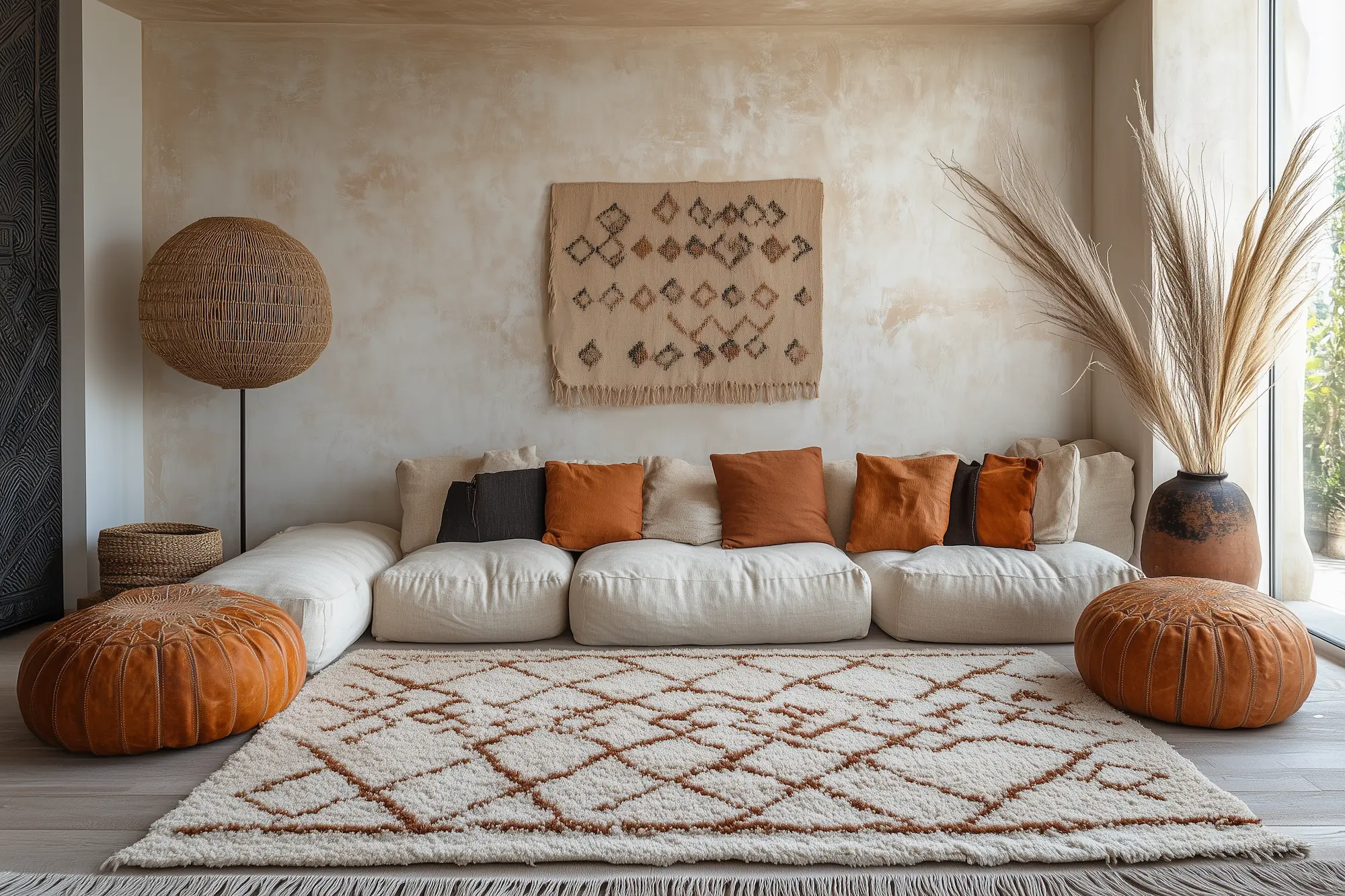
Learn how to style a Moroccan rug: sizing, layering, color palette, room-by-room placement, and common mistakes. A complete styling guide for modern homes.
A Moroccan rug is not furniture. It is not an accessory. It is a weight that changes the center of gravity of a room the moment it unrolls. Where you place it, what you place around it, how you let it breathe — these decisions will determine whether your rug becomes the quiet anchor of a space you love or an expensive mistake you learn to avoid looking at. This guide is a complete handbook to styling Moroccan rugs in contemporary homes, drawn from years of working with clients whose apartments, houses, and studios have been transformed by the correct placement of a single handwoven textile.
The principles that follow apply whether you own a classic Beni Ourain, a colorful Azilal, an exuberant Boucherouite, or a vintage kilim. Each tradition has its own personality — but the rules of living well with any of them share the same logic. Understand the rules, then decide which ones to break.
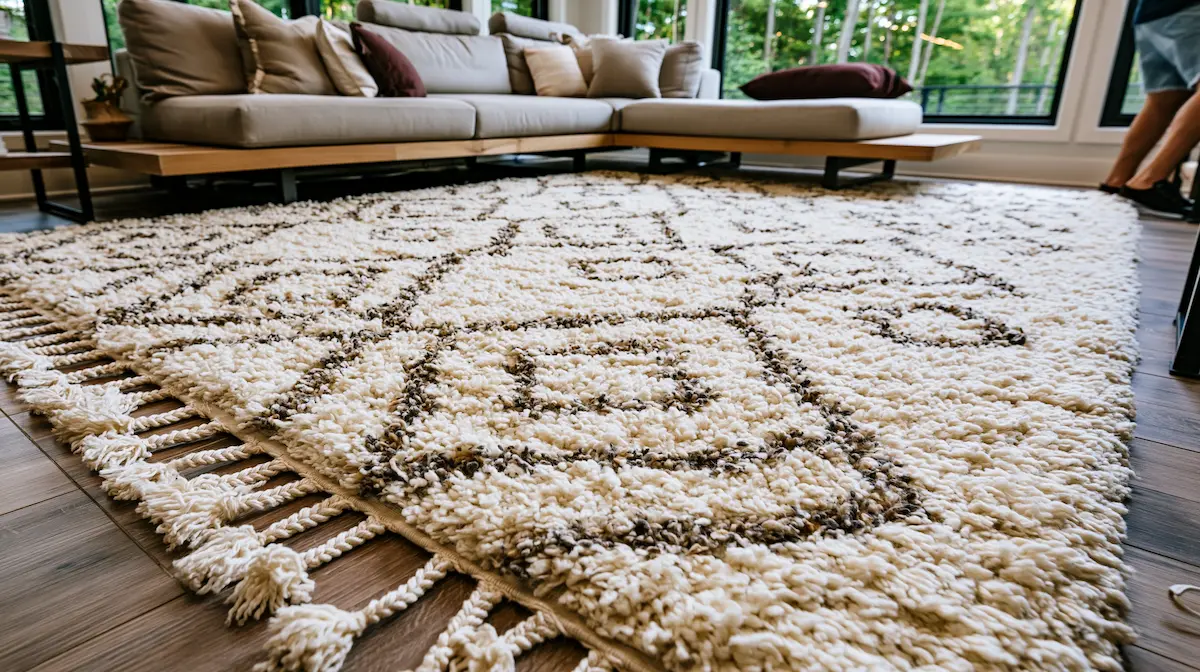
The most common styling mistake is to buy a rug you love and then look for a place to put it. This reliably ends in disappointment. A Moroccan rug is a commitment — in size, in color, in visual weight — and it cannot be forced to work in a space that does not want it. The right approach reverses the process entirely.
Before you shop, stand in the room. Notice where the light falls in the morning and in the late afternoon. Notice which walls already carry visual weight — a bookshelf, a painting, a fireplace — and which walls are quiet. Notice where your eye naturally rests when you walk in. These observations will tell you what the rug needs to do in this room: disappear into it as a neutral foundation, or become the reason your eye stops at the center. One rug cannot do both jobs.
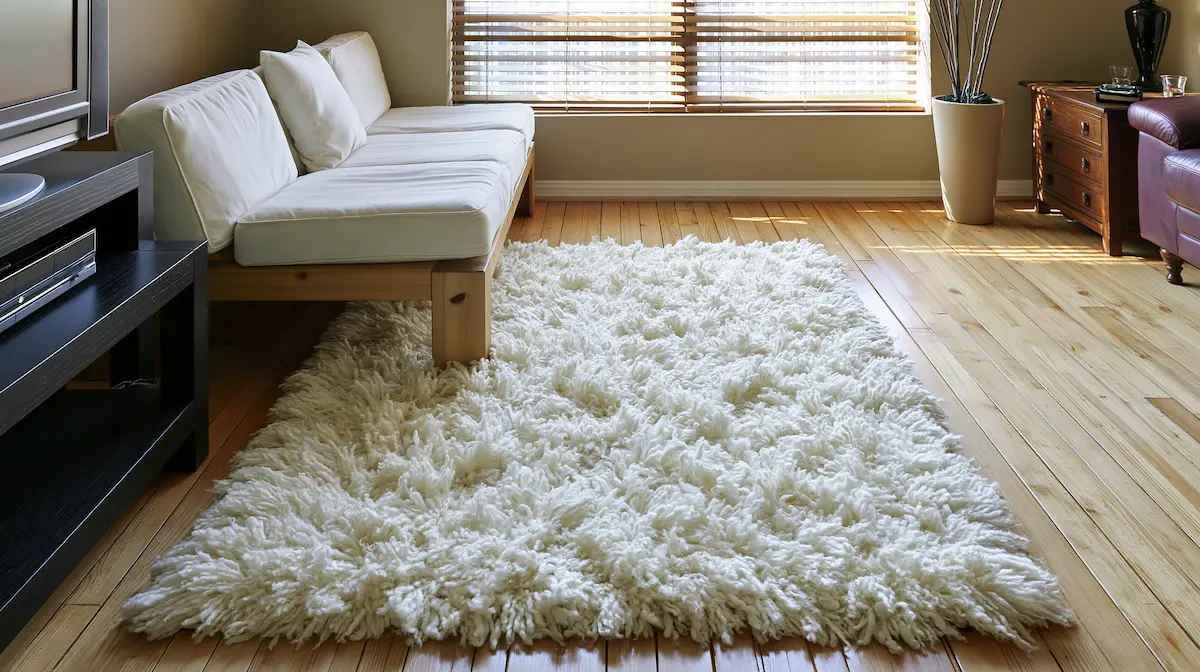
Size is the single most under-discussed factor in rug styling. A rug that is two sizes too small for a room will make the room feel smaller, not larger — no matter how beautiful the rug itself is. A few reliable rules for the most common rooms:
The rug should be large enough that at least the front legs of every major seating piece — sofa, armchairs, accent chairs — rest on it. The best arrangement places all four legs of all pieces on the rug, creating a defined island of seating within the larger room. If full-on-rug is impossible, front-legs-on-rug is the minimum. Floating a rug in the center with all furniture off it is almost always a mistake: it makes the rug look like a raft adrift in empty floor.
Two options work. Option one: a rug large enough that it extends at least sixty centimeters beyond the sides and foot of the bed, so that bare feet land on wool whether you sit on the left side, the right side, or the bottom edge. Option two: a smaller rug placed perpendicular to the bed, covering the bottom two-thirds, leaving the head of the bed on bare floor. Never place a small rug entirely under the bed — the rug disappears, and you are left with a band of exposed floor that makes the bed look stranded.
The rug must be large enough that chairs remain on it even when pulled out from the table. Measure your table with chairs fully extended — usually seventy-five to eighty centimeters from each edge — and size the rug to that footprint plus a generous margin. Chairs that catch on the edge of a rug every time someone sits down are a daily irritation, and they wear the rug’s edges prematurely.
Here the rug can and should be smaller than the floor. Runners and entry rugs define the path without dominating it. Choose a piece that leaves at least twenty centimeters of floor visible on each long side.
Each Moroccan rug tradition has a different visual voice. Choosing the right tradition for the room is as important as choosing the right size. A brief field guide:
The mistake to avoid: forcing a Boucherouite into a room that has already made its statement through colorful furniture or busy art. Two voices competing always produces visual noise, never harmony.
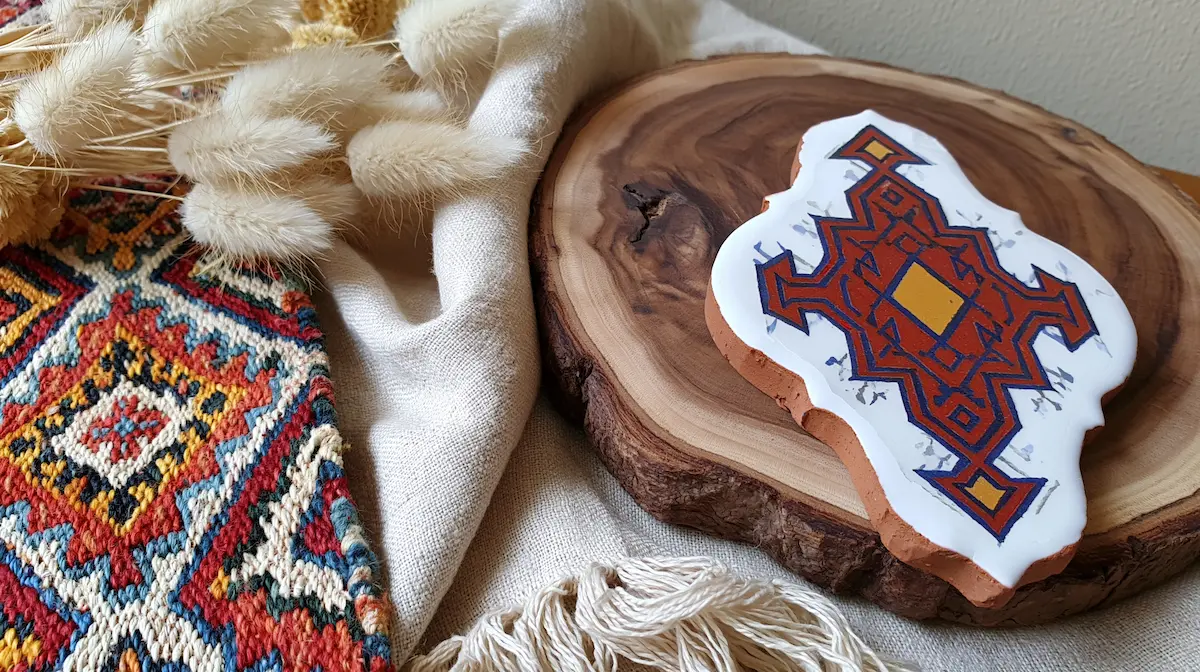
A Moroccan rug carries between three and fifteen colors depending on the tradition. Rather than trying to match everything in the room to the rug, choose one to three of its colors and echo them — once, quietly, somewhere else in the room. A single cushion in the rug’s dominant red. A lamp shade in one of its softer neutrals. A single spine of a book on the shelf that picks up its indigo. These small echoes bind the room together without making it look coordinated, which is always the kiss of death for an interior that wants to feel lived-in.
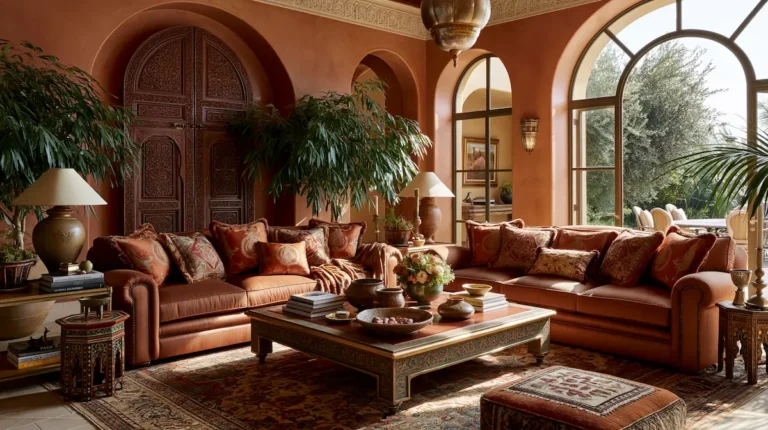
The walls, the ceiling, the large furniture pieces, and the curtains should remain as neutral as the rug allows. White, off-white, warm cream, pale oak, unfinished plaster, linen, and natural stone all work universally. The rug brings the color. The room brings the calm.
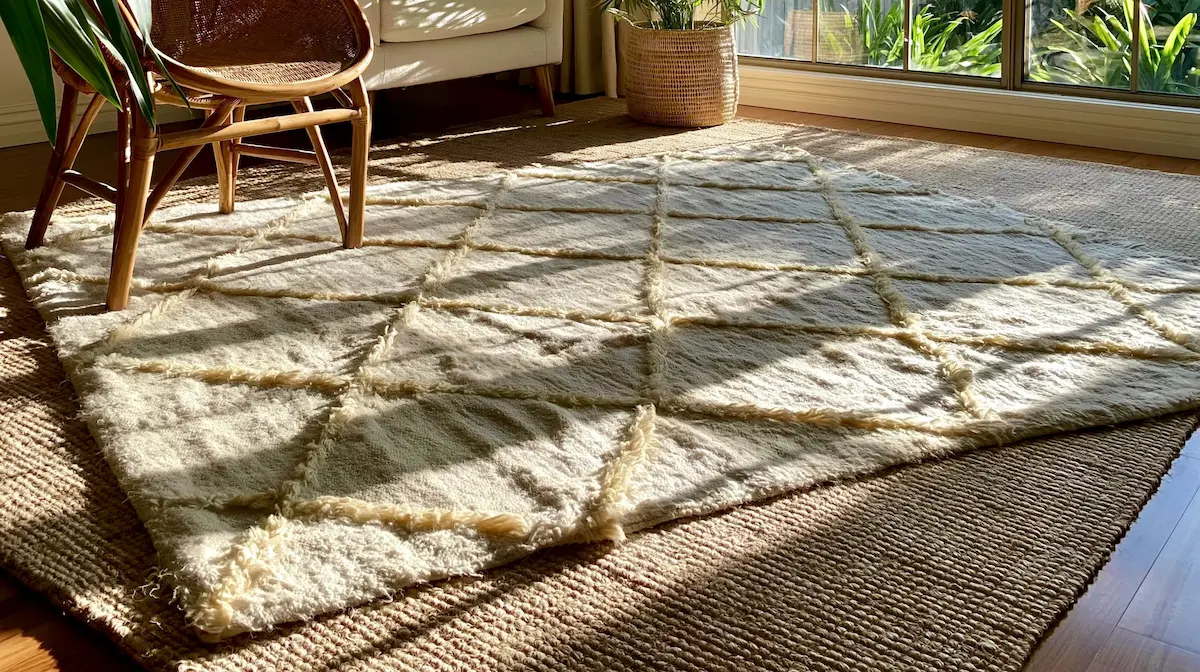
Layering — placing a smaller rug on top of a larger one — is a styling technique that can add depth and warmth to a room when done well, and that can look cluttered when done badly. A few principles:
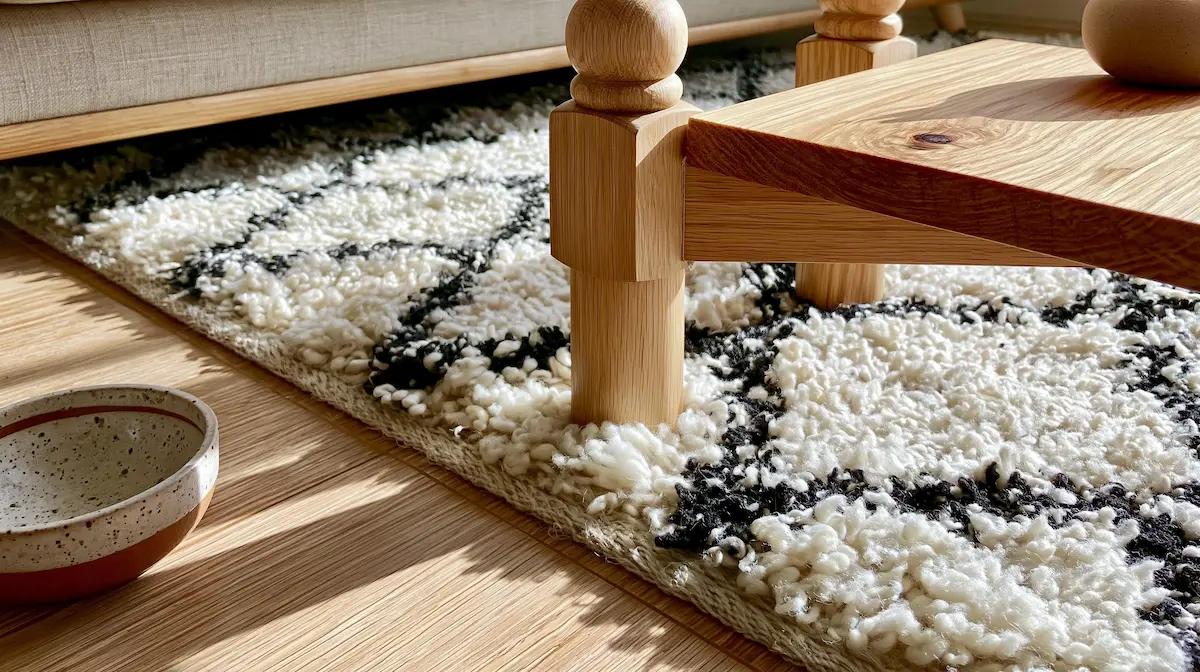
The furniture that surrounds a Moroccan rug should speak its language without imitating it. A few reliable pairings from years of client work:
Oak, walnut, elm, olivewood, and cedar all pair beautifully with Moroccan wool. Raw or lightly oiled finishes work better than heavy stains or high-gloss lacquer. A low wooden coffee table on a Beni Ourain rug is one of the most reliable compositions in interior design.
Natural fiber upholstery in neutral tones — washed linen, heavy cotton, unbleached muslin — feels related to the wool of the rug in a way that leather and velvet rarely do. When you want the rug to lead, dress the furniture quietly.
Handmade ceramics, terracotta planters, unpolished marble, and travertine all extend the rug’s handmade character into the rest of the room. Matte finishes generally work better than glossy ones.
A single leather armchair, a leather ottoman, or a leather-bound book spine can add warmth and contrast. Whole rooms upholstered in leather tend to overwhelm a Moroccan rug rather than support it.
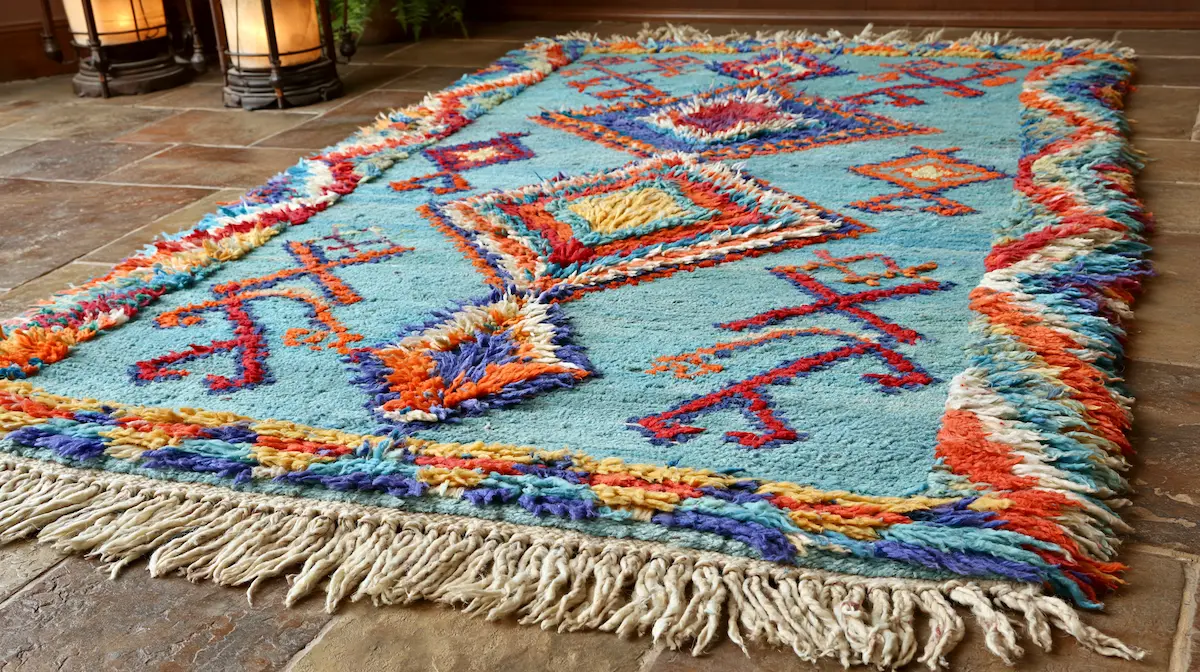
Lighting is the factor that most separates rooms where a Moroccan rug looks alive from rooms where it looks flat. Three principles:
A classic Beni Ourain, sized to anchor the full seating area, will work in almost any living room. Pair with a low wooden coffee table, natural-fiber upholstery, one or two ceramic pieces, and plenty of books. Resist the urge to layer a smaller patterned rug on top unless the room is large and genuinely needs the depth.
Azilal excels here. Its personality is gentle enough to live with daily and narrative enough to reward a slow morning. A vintage Azilal under a linen-dressed bed, with a single ceramic lamp on each nightstand, is a composition that does not get tired.
This is the one place a Boucherouite can safely shock a guest. An entry already announces itself as a transition space, which means a colorful, unexpected rug reads as intentional rather than chaotic. Pair with a simple wooden bench, a mirror, and a single planted branch.
Flat-weave kilims work best in cooking and eating spaces because they are thinner, easier to clean, and less forgiving of spills — they dry fast and resist staining. Reserve pile rugs for spaces where spills are rare.
Azilal and small Boucherouite pieces are ideal here — their colors engage children, their wool is soft to play on, and their natural materials are among the safest fibers in the textile world. Avoid white Beni Ourain in children’s rooms unless you have genuinely made peace with the realities of felt-tip pens.
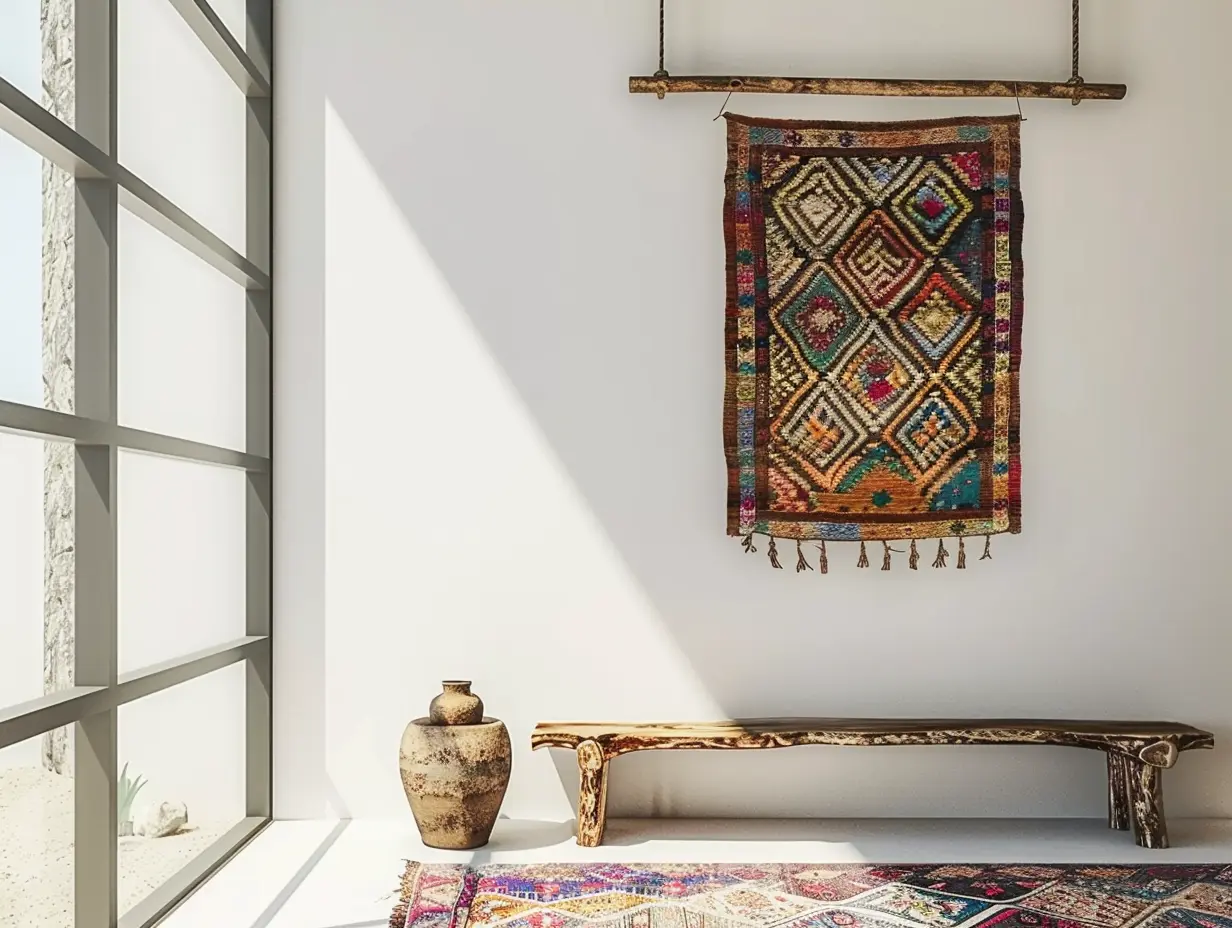
Small vintage Moroccan rugs — particularly Azilal and Boucherouite pieces under two meters long — make exceptional wall textiles. Museums have been hanging them for decades. A simple, flat wooden rod slid through a hand-sewn top sleeve holds the rug flat against the wall without damaging the fibers. Keep direct sunlight off naturally dyed pieces to preserve their color.
A rug on the wall changes what the room means. It announces that you are taking the textile seriously — as art, not only as floor covering — and it invites guests to do the same.
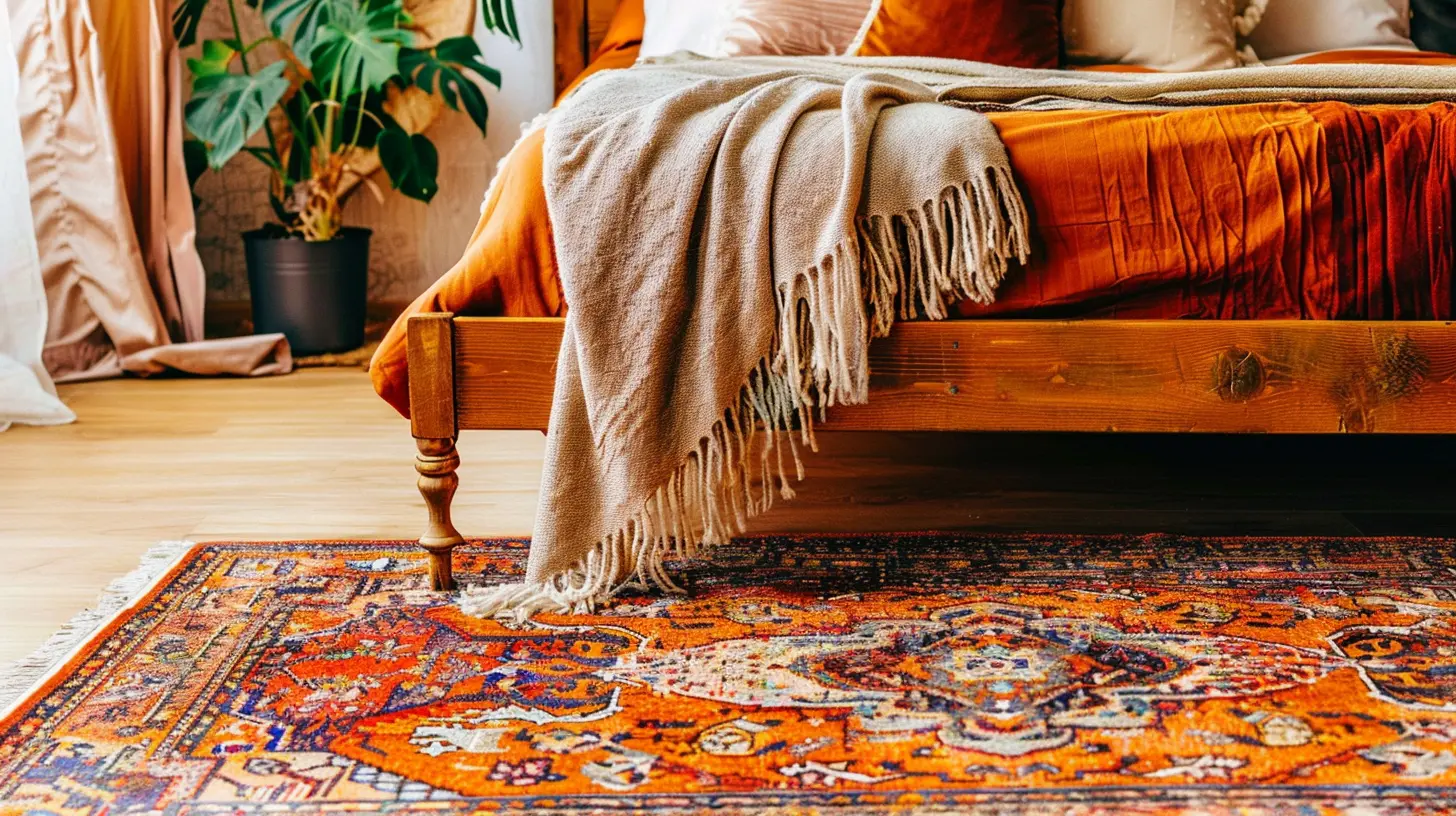
A Moroccan rug does not require seasonal rotation, but many of our clients adjust the room around it as the year turns. In winter, layer a chunky wool throw on the sofa above the rug; bring in deeper candles and warmer lamps. In summer, strip the room back to linen, open the windows, and let the rug soften under bare feet. The rug itself is the constant. The room around it breathes.
Yes, carefully. A Beni Ourain pairs well with an antique Persian runner in an adjacent hallway, for example. The key is ensuring each rug has its own clear zone — rooms, not competing within a single room.
No. The rug and the sofa should relate — perhaps sharing a tone family or a texture cousin — but matching them creates a showroom feeling rather than a lived-in one. Aim for harmony, not identity.
Yes — this is actually where Beni Ourain established its international reputation in the mid-twentieth century. Le Corbusier, Aalto, and their peers placed these rugs in their most celebrated modernist interiors precisely because the contrast worked.
Every four to six months for most rugs. This evens out sun exposure, foot traffic, and any pressure from furniture. Rotation is the single most important preservation habit.
Yes, and you should — especially on hard floors. A natural rubber or felt rug pad extends the rug’s life by reducing wear, prevents slipping, and adds a small layer of cushion underfoot. Avoid PVC pads, which can off-gas and damage natural wool over years.
Styling a Moroccan rug is ultimately less about the rug and more about what you are willing to leave out of the room. The best-styled interiors that feature Moroccan textiles are not full. They are edited. The rug does not have to fight for attention because nothing else is shouting. The wall is quiet. The furniture is quiet. The light is warm and natural. And the rug, released from the obligation to compete, simply does what it has always done: anchor the people who live in the room, soften their footsteps, and remind them, every time they look at it, that some objects are made slowly on purpose.
This is what good styling feels like. And once you have lived with a Moroccan rug styled this way, it becomes very difficult to go back.
As a rule, the rug should be large enough that at least the front legs of your seating sit on it – this visually unites the furniture rather than leaving the rug stranded like an island. When in doubt, size up: a too-small rug shrinks a room, while a generous one anchors it.
Yes, and it is one of the most effective Afrohemian moves. Lay a larger, calmer flat-weave or neutral rug as a base, then float a smaller statement piece – a colorful Azilal or Boucherouite – on top at an angle or off-center. Keep one of the two quiet so they complement rather than compete.
Anchor everything to a shared palette and vary the scale. Let one bold piece lead – usually the rug – then echo just one or two of its colors in your cushions and throws, keeping walls and large furniture calm.
Repetition and restraint. Choose two or three colors from your rug and repeat them deliberately around the room while leaving plenty of negative space. Natural materials and warm, layered lighting do the rest. The goal is quiet luxury, not maximalism.
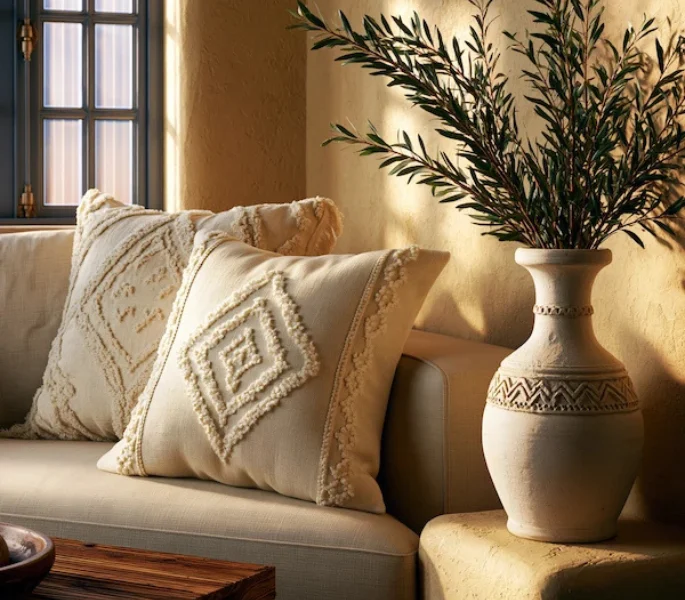
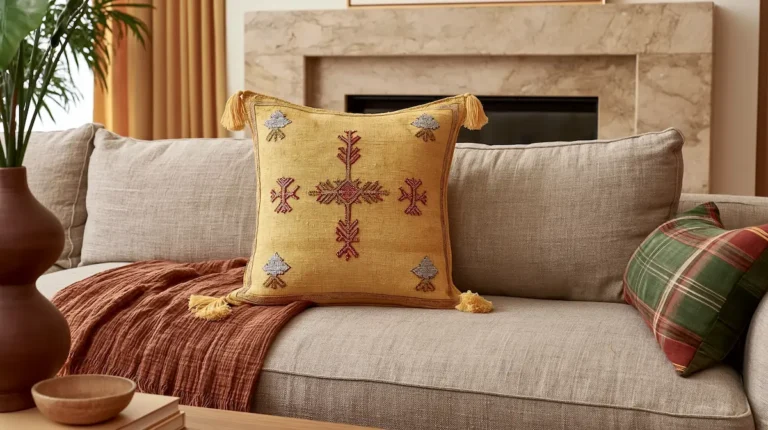
The fastest way to pull a Moroccan-styled room together is to repeat the rug’s colors at sitting height – and there is no more elegant tool for that than a handwoven Sabra silk pillow. Its cool, pearlescent sheen lifts a room out of themed and into quiet luxury. Browse our one-of-one Sabra silk pillows to find the shades that echo your rug; each is handwoven in Morocco, $99, with free worldwide shipping.
A question we get often — and one worth answering properly here.
The single thing most people get wrong isn’t the rug they choose. It’s where they start. They fall in love with a piece first, then try to force it into a room that was never built for it.
The right order is always: room first, light second, rug third.
If you’re working with a space right now and unsure where to begin — drop your room dimensions and what you’re working with in the comments. Happy to point you in the right direction.