
FREE U.S. SHIPPING · DHL EXPRESS DELIVERY
ARTISAN-MADE IN MOROCCO · LIMITED COLLECTIONS
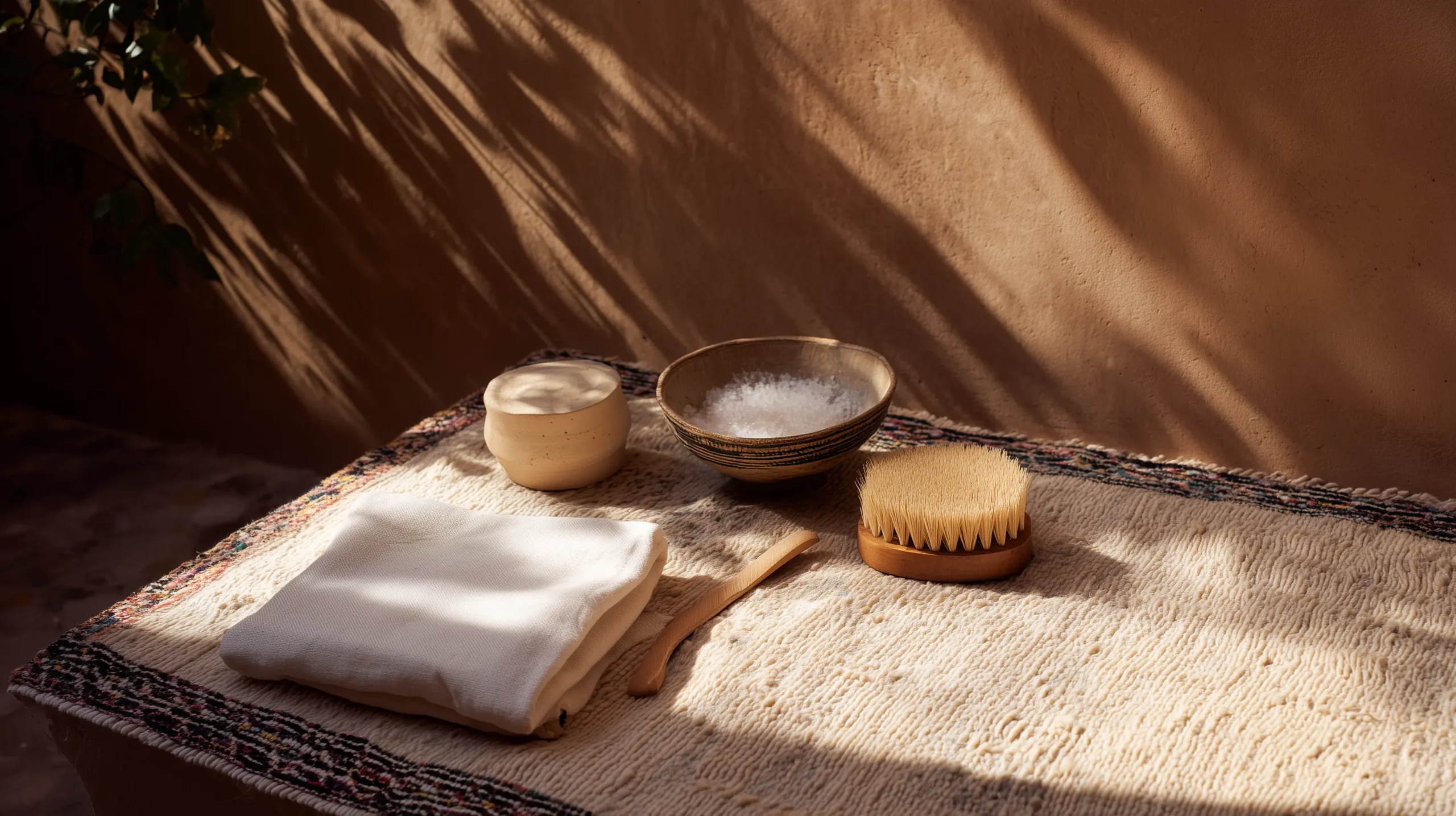
The complete Moroccan rug care guide: daily maintenance, stain removal, seasonal routines, professional cleaning, storage, moth prevention, and tradition-specific tips.
A well-made Moroccan rug is one of the few objects in your home designed to outlive you. Families in the Atlas Mountains routinely use rugs woven by grandmothers and great-grandmothers — textiles that have crossed three generations and still look better than most furniture in most Western homes. The reason is simple: Moroccan rug care, done well, is less about heroic intervention and more about a few small, consistent habits practiced over decades. This guide is a complete handbook to those habits — daily, weekly, seasonal, and emergency.
What follows applies to every major Moroccan rug tradition — Beni Ourain, Azilal, Boucherouite, kilim — with tradition-specific notes where they matter. The principles are universal. The specifics save your rug.
Before any specific technique, internalize these three rules. They are the foundation of every other decision you will make about your rug.
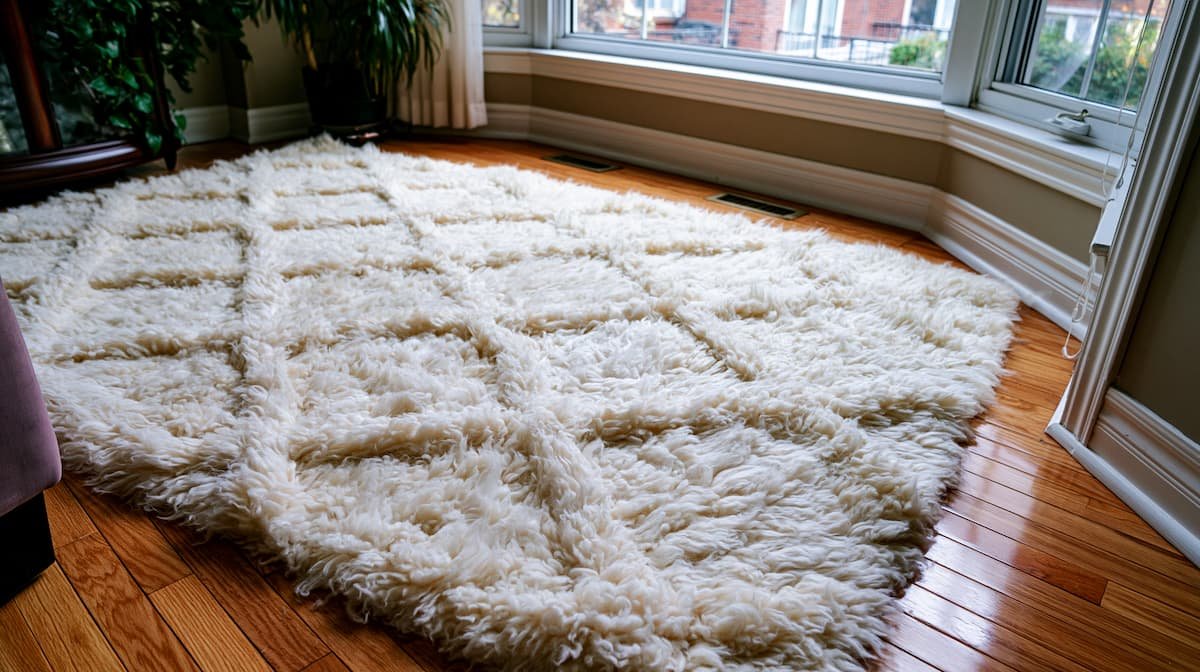
The everyday routine is simple and should remain simple. Resist the urge to elaborate it.
Vacuum your Moroccan rug once or twice a week in normal household use. Always use the suction-only setting or a vacuum without a rotating beater bar. Beater bars tear at the pile, loosen knots, and accelerate wear dramatically — they are designed for synthetic wall-to-wall carpet, not for hand-knotted wool. Move the vacuum head slowly in the direction of the pile, not against it. Do not vacuum the fringes directly; they can tangle and rip. Instead, sweep fringes gently with a soft brush or by hand.
For smaller rugs, take them outside once a month, drape them over a sturdy railing or clean line, and beat gently with a flat paddle or the back of a broom. This removes dust that vacuuming cannot reach — dust that, over years, settles into the foundation of the rug and wears it from the inside out. Airing in indirect sunlight for a few hours also helps deter moths naturally.
Once a week, glance at the rug. Look for small unraveling threads at the edges or fringes, early signs of moth activity (tiny piles of fiber dust beneath the rug), and any spills you may have missed. Small problems caught early are trivial to fix. The same problems ignored for six months become expensive repairs.
Most damage to hand-knotted wool rugs comes not from the spill itself but from the panicked over-cleaning that follows it. The correct response is nearly always the same, regardless of what has been spilled:

Blot immediately. Follow with a solution of one teaspoon of pH-neutral wool soap in a cup of cold water, applied sparingly with a clean white cloth. Blot with the damp cloth, then blot dry. Repeat as needed. Never use chlorine bleach, hydrogen peroxide, or commercial stain removers on Moroccan wool — they strip color and damage fibers.
Sprinkle the stain generously with cornstarch or baking soda. Let it sit for at least thirty minutes — longer for heavy grease. The powder absorbs oil from the fibers. Vacuum gently. If a shadow remains, repeat the powder treatment. Only after two or three powder treatments should you consider dabbing with cold water and a tiny amount of wool soap.
Blot up as much liquid as possible immediately. Apply a solution of one part white vinegar to three parts cold water to neutralize odor and acid. Blot thoroughly. Allow to air dry completely. Never use enzyme cleaners or ammonia-based products — enzymes can damage natural wool proteins, and ammonia resembles urine and may encourage repeat accidents in the same spot.
Let mud dry completely before touching it. Wet mud smears and pushes into fibers. Dry mud, on the other hand, brushes off cleanly — use a soft brush and then vacuum gently. Any residual shadow can be treated with cold water and wool soap after the bulk of the dirt is removed.
Freeze first. Place a plastic bag of ice cubes on the wax or gum until it hardens, then gently chip it off with a dull knife. Remaining residue can be absorbed with a paper bag and a warm (not hot) iron pressed briefly on top — the wax transfers to the paper bag.
Four times a year, give the rug attention beyond the weekly routine. These seasonal habits are what separate rugs that last fifty years from rugs that last fifteen.
Every three to six months, rotate the rug 180 degrees. This evens out foot traffic, furniture compression, and sun exposure. Without rotation, you will eventually see a pale stripe where a window has faded one side, or a worn path where feet have crossed the rug for years.
Once or twice a year — ideally in spring and fall — take the rug outside for a full day of airing. Drape it over a clean railing in a shaded, breezy spot. Do not leave it in direct sun for more than an hour; prolonged sun exposure fades natural dyes. The airing refreshes the fibers, releases trapped moisture, and discourages moths.
Flip the rug over and examine the back. Look for any loose warp threads, small holes beginning to form, or areas of thinning pile. Early intervention — a single knotted repair by a specialist — costs perhaps twenty euros. The same problem ignored for two years can require hundreds of euros of restoration.
If you use a rug pad — and on hard floors you should — inspect it seasonally. Rug pads flatten and harden over time. Replace a tired pad before it allows the rug to slide or compresses permanent creases into the weave.
Every five to seven years, or sooner if the rug has experienced heavy soiling, have it professionally cleaned by a specialist who works specifically with hand-knotted wool rugs. This is not a general carpet cleaner, and it is not a dry cleaner. It is a specialist — often an oriental or antique rug cleaner — who uses cold water, pH-neutral soap, and a traditional flat washing process.
Before booking, ask these questions:
If the answer to any of these is no, find another cleaner. A wrong cleaner can destroy a rug in one afternoon that has already survived fifty years of daily use.
If you need to store a rug — moving, renovation, seasonal rotation — proper storage preserves it. Improper storage can destroy it.
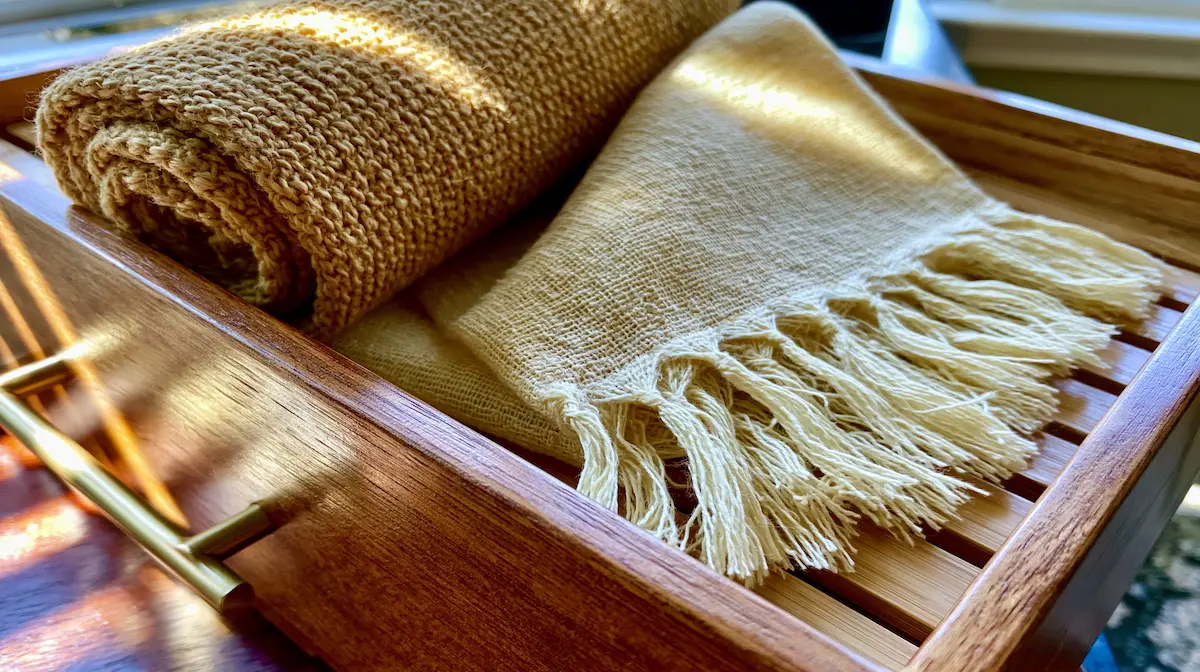
Clothes moths are the only serious pest threat to wool rugs. They lay eggs in dark, undisturbed places where the larvae can feed on natural fibers. Prevention is far easier than treatment.
Prevention: vacuum regularly, especially under furniture where larvae hide. Rotate the rug often — moths prefer undisturbed areas. Air the rug in sunlight once a season. Use natural deterrents like cedar or lavender in storage and in any closet near the rug.
Detection: tiny silken tubes, small irregular holes, and a fine powdery dust beneath the rug are all signs of active infestation. A single moth is rarely a problem; visible larvae or fiber dust means act immediately.
Treatment: isolate the rug outdoors in direct sunlight for an entire day if weather permits — UV kills eggs and larvae. For serious infestations, a reputable rug cleaner can freeze-treat the rug, which kills all life stages without chemicals. Avoid household insecticides on the rug itself; residues damage wool.
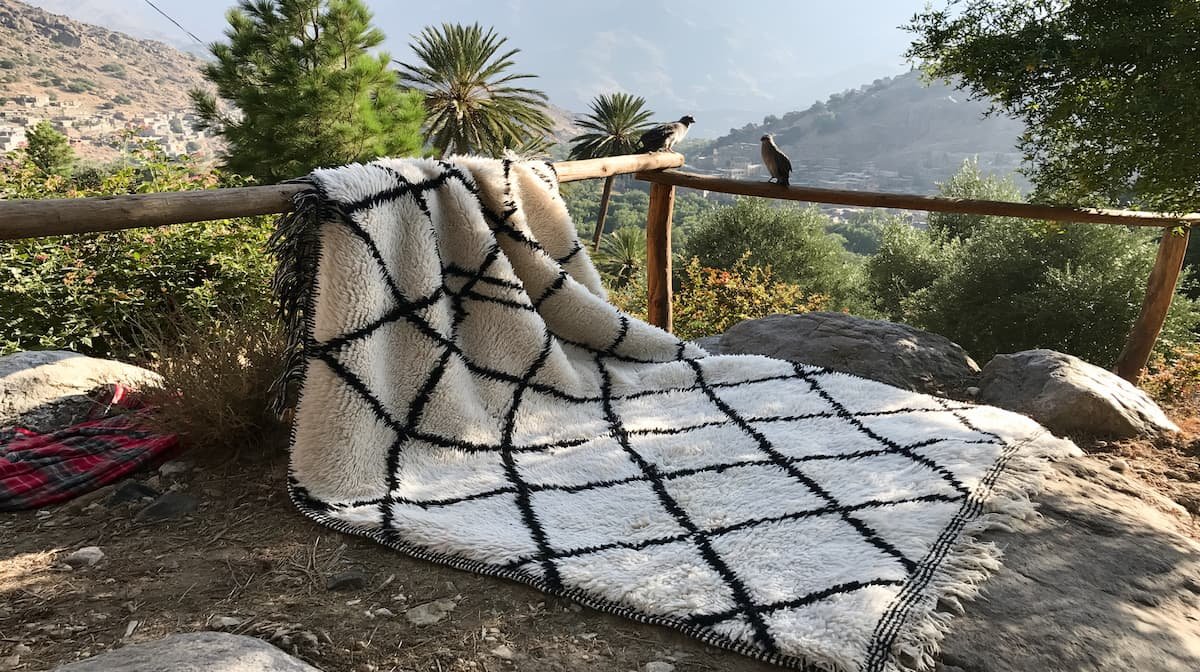
The ivory field shows dirt more readily than darker rugs. Expect to rotate more frequently and to vacuum slightly more often. The thick pile can trap crumbs and pet hair deep in the weave; make sure your vacuuming reaches the full depth of the pile.
Naturally dyed wool is more sensitive to light than undyed wool. Keep Azilal rugs out of direct prolonged sunlight. Never use any cleaning product that is not explicitly safe for natural dyes — when in doubt, cold water alone is the safest treatment.
Because Boucherouite rugs combine multiple fiber types in a single piece, water-based cleaning is risky — fibers behave differently when wet and the rug may shrink unevenly. Stick to dry methods: vacuum, brush, air, and spot treat only. For deep cleaning, use a specialist experienced with mixed-fiber textiles.
Kilims are easier to clean than pile rugs — they can be shaken more aggressively and some can even be hand-washed in cold water with wool soap if fully flat-dried. Always test a small corner first to confirm colorfastness.
A full wash should happen every five to seven years at most, by a specialist. Between washes, rely on vacuuming, airing, and spot treatment. Over-washing is one of the most common causes of premature wear.
Yes, in moderation. Sprinkle lightly, let sit for thirty minutes, and vacuum thoroughly. Avoid heavy coating or frequent use, as baking soda can dry out wool over time.
Musty smells usually indicate trapped moisture. Air the rug outdoors in indirect sunlight for a full day. If the smell persists, the rug may need professional cleaning to address moisture that has penetrated the foundation.
No. Consumer carpet cleaners use hot water extraction, which damages wool and can set stains. Hand methods and occasional specialist cleaning are the only safe approaches.
Yes. New hand-knotted wool rugs release loose fibers for the first few weeks to months of use. This is normal and stops on its own. Vacuum gently during this period. Never pull at loose fibers; trim them flush with scissors if needed.
The people who have cared for Moroccan rugs the longest — the families in the Atlas Mountains who have lived with them for generations — practice almost no care at all by Western standards. No steam cleaning. No stain-removal products. No professional services. Just regular sweeping, occasional airing, immediate attention to spills, and decades of simple respect. The rugs they pass down still look beautiful.
The lesson is not that we should abandon modern tools. It is that a good Moroccan rug does not need what most of us instinctively want to give it. Less intervention. More patience. A soft brush. Cold water. Sunlight. Rotation. Time.
This is Moroccan rug care at its most honest — a quiet partnership between you and a textile that, if you let it, will outlast every other object in the room.
Less often than you think. Vacuum gently every week or two without a beater bar, rotate the rug every few months so it wears evenly, and reserve deep cleaning for every few years. Over-cleaning natural fibers does more harm than dust ever will.
Blot, never rub. Press a dry cloth straight down to lift the liquid, working from the outside of the spill inward. For stubborn spots, a tiny amount of cold water with a pH-neutral wool soap on a clean white cloth is safe. Avoid hot water and harsh detergents.
No to both for most pieces. Steam and machine agitation can shrink, felt, or distort hand-knotted wool, and they are especially risky for mixed-fiber Boucherouite or sequined handira. Use a specialist who works in cold water with pH-neutral soap.
Keep it out of long, harsh, direct sunlight. Air the rug outdoors in indirect light a couple of times a year, vacuum the underside occasionally, and store any rolled rug with cedar sachets in a breathable cotton wrap – never sealed in plastic.
The same gentle habits that keep a rug beautiful keep every handmade textile in the room looking its best. If you are building a space designed to last, our handwoven Sabra silk pillows are made to the same slow, natural standards as the rugs you are caring for. Explore the one-of-one Sabra silk pillow collection; each is $99 with free worldwide shipping.