FREE U.S. SHIPPING · DHL EXPRESS DELIVERY
ARTISAN-MADE IN MOROCCO · LIMITED COLLECTIONS
Sabra silk—the vegan cactus silk of Morocco—explained in full: how it is grown from agave, retted, spun, dyed with natural pigments, and handwoven into the luxury textiles shaping modern interiors.
In the sun-drenched south of Morocco, where the Sahara begins to whisper against the foothills of the Anti-Atlas, a plant has been quietly clothing the floors and walls of Berber homes for more than a thousand years. It is not silk. It is not cotton. It is sabra—a luminous, vegetal thread drawn from the leaves of the agave cactus. To the artisans of the Tigemi cooperative, it is simply the fiber of our grandmothers. To the design world, it is the quiet luxury that has begun to replace conventional silk in the most considered interiors.
This guide is an invitation into that world. Whether you are researching sabra silk before your first purchase, styling a finished piece in your home, or simply curious about one of Morocco’s oldest and most misunderstood textiles, you will leave these pages knowing how sabra silk is grown, made, dyed, recognized, and cared for—and why a single handwoven panel can take a weaver three weeks to complete.
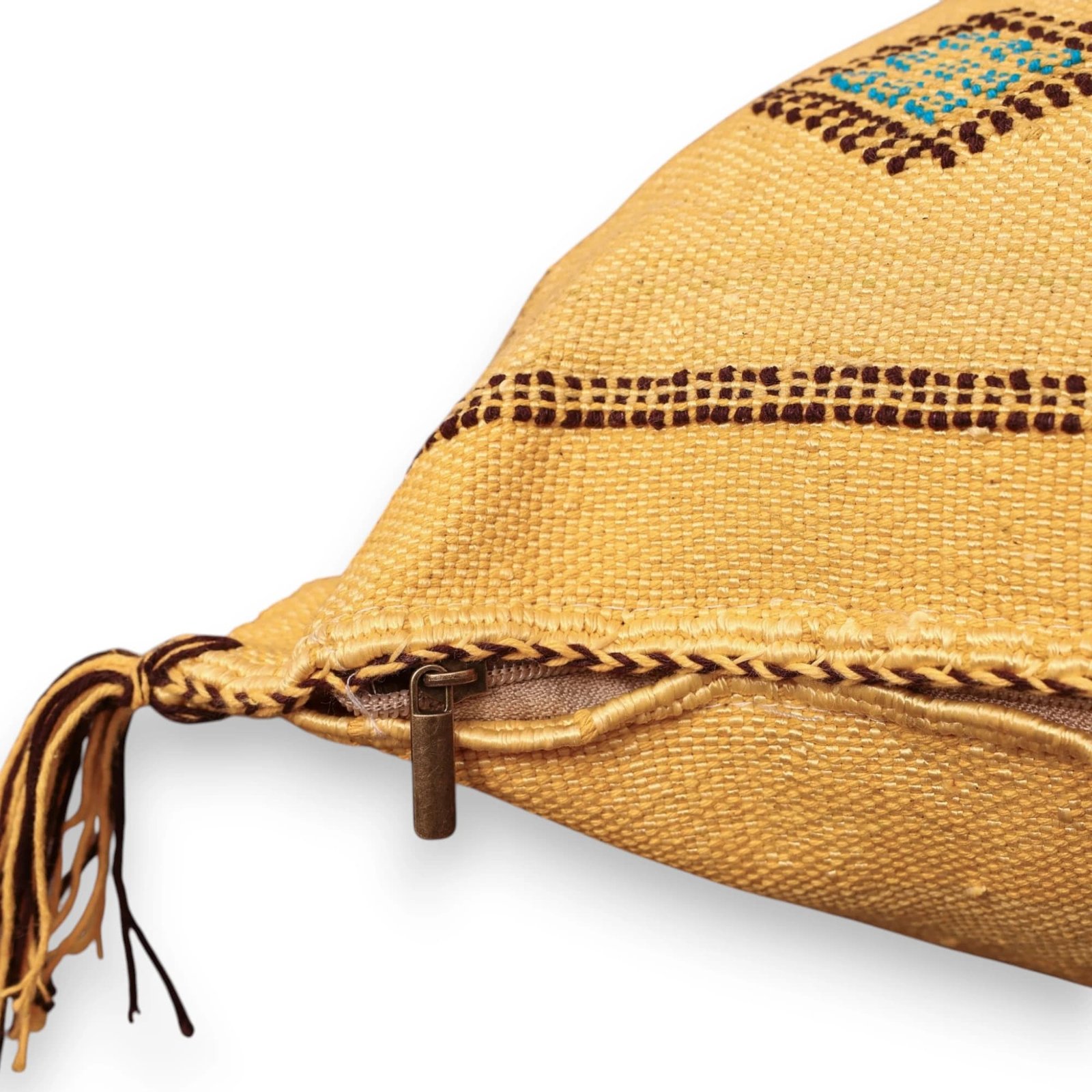
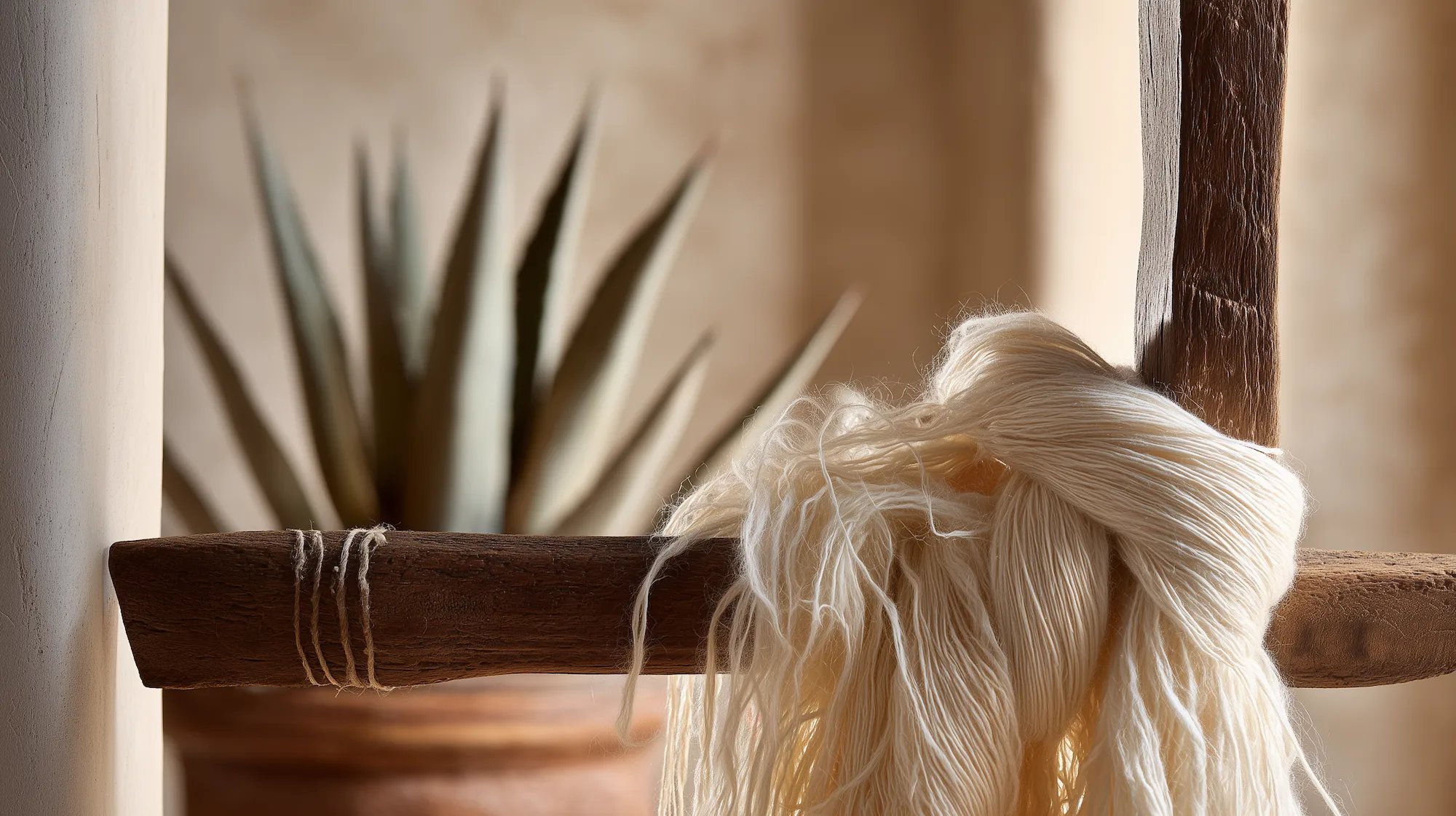
Sabra silk—also called cactus silk, agave silk, or soie végétale in French—is a natural plant fiber extracted from the long, blade-like leaves of the Agave americana cactus. Despite its name, sabra silk contains no animal silk whatsoever. It is entirely vegan, produced without silkworms, and has been woven by hand in Morocco since long before the country’s colonial period.
Its appeal is sensory first. Sabra has the liquid sheen of mulberry silk when it catches the afternoon light, the cool drape of linen against the palm, and the quiet strength of hemp when woven tightly. Designers often describe its hand as “silk with a backbone”—a fiber that refuses to wilt the way animal silk can in humid climates, yet retains the lustrous depth that makes silk irreplaceable in luxury interiors.
Sabra is not a substitute for silk. It is silk’s older, quieter cousin—one that was being spun in the Atlas long before sericulture reached North Africa.
The Agave americana is not native to Morocco. It arrived from the Americas in the sixteenth century, carried across the Atlantic on Spanish trade routes, and found in the Moroccan south a climate close enough to its Mexican homeland to thrive. Within a few generations, Berber communities in the Souss Valley and the High Atlas had domesticated it into a working crop—for hedging, for fermented drink, and above all, for its fiber.
The word sabra itself is Arabic for “patience,” and the name is earned. An agave plant must grow for six to eight years before its leaves are long and fibrous enough to harvest. A single mature leaf yields only a modest bundle of fiber, and a weaver may need the fibers of twenty to thirty leaves to warp a single medium-sized rug. Every Tigemi piece is, quite literally, a decade of patience folded into cloth.
Every meter of sabra silk passes through five distinct stages of craft, most of them performed by different hands in different villages. What follows is the process as it is still practiced today in the cooperatives Tigemi partners with.
Leaves are cut by hand in the early morning, when the plant is most turgid and the fibers slip most cleanly from the surrounding pulp. Only the oldest, outermost leaves are taken; the plant is left to continue producing for another season. A skilled harvester can process forty to sixty leaves in a day.
This is the stage that defines sabra’s character. Leaves are soaked in fresh water for up to two weeks in a process called retting, during which the soft plant tissue breaks down and releases the long, silken cellulose fibers at the leaf’s core. The retted leaves are then scraped by hand with a wooden blade—never metal, which would darken the fiber—and the raw sabra is washed, combed, and laid in the sun to dry.
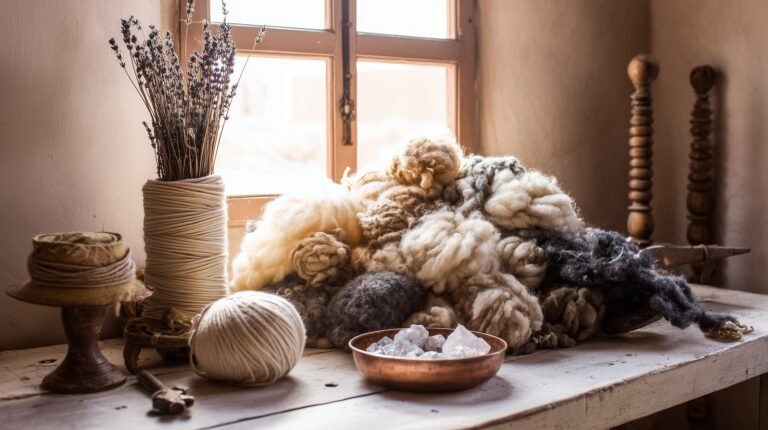
Once dry, the fibers are spun into yarn on a drop spindle or a foot-powered wheel. Sabra is a notoriously willful fiber—longer than cotton, slipperier than wool—and spinning it evenly is the work of practiced hands. A good spinner produces around 300 to 500 meters of yarn in a full day’s work.
Sabra silk accepts color beautifully, and Moroccan weavers have developed a dye palette rooted in the landscape itself. Indigo leaves produce the deep midnight blues of the Atlas skies; pomegranate skins and walnut husks give ochres, rusts, and warm browns; madder root and henna yield reds that range from brick to rose; and saffron threads, when the weaver can afford them, turn the fiber the pale gold of late-afternoon light. The fiber is simmered in the dye bath for hours, then rinsed and sun-dried repeatedly until the color sets deep within the cellulose.
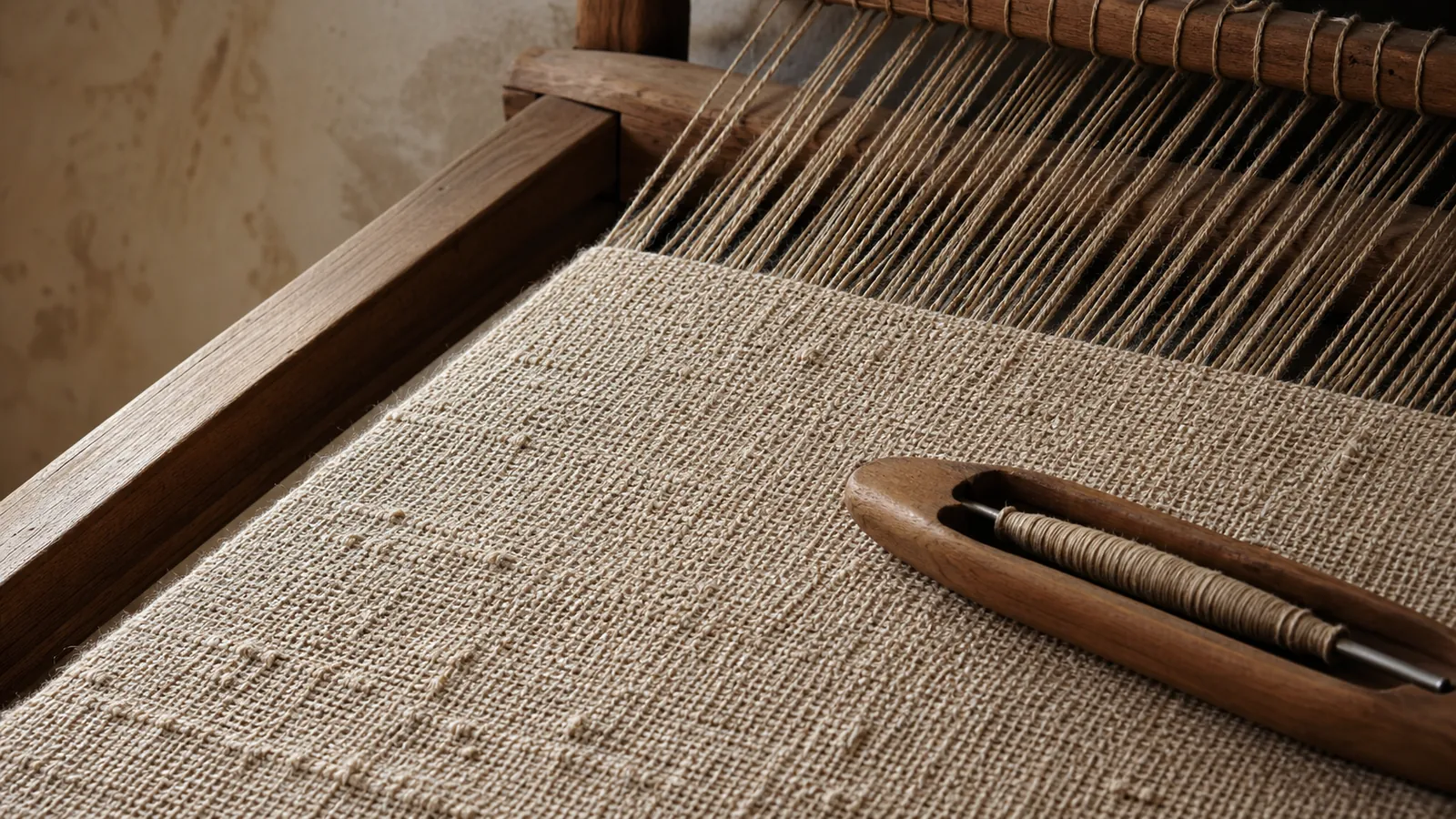
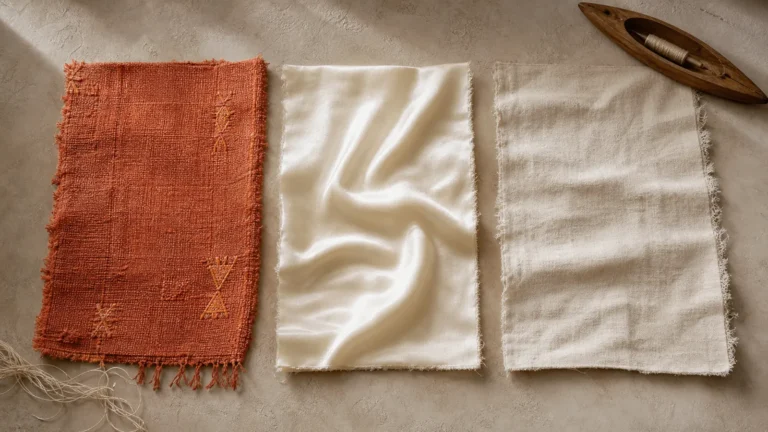
The last stage is the longest. A sabra silk rug of average size—say, eight feet by ten—can take three to five weeks of continuous weaving on a vertical loom, working dawn to dusk. The weaver knots, beats, and trims the fibers entirely by hand, following a pattern held in memory rather than on paper. When the rug is cut from the loom, it is washed one final time in the cold running water of a mountain stream, which locks the dye and gives the fiber its final, unmistakable luster.
The most common question we receive at Tigemi is whether sabra silk is “real” silk. The honest answer is that it is a different material entirely—one that shares silk’s visual and tactile qualities but behaves very differently in a home.
| Quality | Sabra Silk (Cactus) | Mulberry Silk (Animal) |
|---|---|---|
| Origin | Agave cactus leaves | Silkworm cocoons |
| Vegan | Yes | No |
| Sheen | Cool, pearlescent | Warm, luminous |
| Durability | High—resists crushing | Moderate—can flatten underfoot |
| Humidity tolerance | Excellent | Poor |
| Price per meter | $30–$80 | $60–$200+ |
| Typical use | Rugs, throws, cushions, wall pieces | Apparel, bedding, drapery |
For a deeper side-by-side look at how the two fibers perform in luxury interiors, see our companion piece: Sabra Silk vs. Mulberry Silk: Why Vegan Cactus Silk Is Changing Luxury Home Design.
For the last decade, sabra silk has been moving from the riads of Marrakech into the portfolios of New York, London, and Milan’s most specified interior designers. The reason is not fashion; it is performance.
Sabra silk is, in truth, one of the most forgiving luxury fibers you can own. It does not demand dry cleaning, it does not fade in reasonable sunlight, and it can be gently hand-cleaned with cold water and a pH-neutral soap. The fiber’s vegetal origin makes it naturally more resilient than its animal counterpart.
For a full walkthrough—including what to do about spills, pets, and long-term storage—consult our dedicated guide: How to Clean and Care for a Handwoven Moroccan Rug.
Sabra silk is one of the rare luxury textiles whose ethical case writes itself. The agave plant requires no irrigation, no pesticides, and no fertilizer—it grows where almost nothing else will. The fiber is extracted without chemical solvents; the dyes come from kitchen and garden; the looms are powered by hand. A finished Tigemi piece has, by any honest accounting, one of the smallest carbon footprints of any woven textile in the luxury market.
Just as importantly, the craft sustains a rural economy that would otherwise have disappeared. Every meter of sabra silk we sell pays directly into cooperatives in which women weavers hold both wages and ownership—a model we write about in detail in Handwoven in Morocco: Inside the Berber Weaving Traditions That Shape Every Tigemi Piece.
As sabra silk has become more desirable, so have the imitations. Synthetic rayon and mercerized cotton are often sold as “cactus silk” in tourist markets and unverified online shops. Five tests separate the real from the imitation:
No. Sabra silk is a plant fiber extracted from the agave cactus and contains no animal silk. It is a vegan alternative that shares silk’s visual qualities but behaves like a stronger, more durable fiber in use.
Yes. Sabra silk is entirely vegan. No silkworms are harmed in its production, and when dyed with traditional Moroccan pigments, no animal-derived dyes are used either.
Authentic handwoven sabra silk typically ranges from $30 to $80 per meter of woven textile, depending on density, dyeing, and provenance. Finished pieces—rugs, throws, and cushions—are priced by the weaver’s hours rather than the material alone.
Naturally dyed sabra silk is remarkably lightfast. Indigo and madder, in particular, mellow rather than fade, and many antique sabra pieces retain their color after a century of use. Synthetic dyes are less stable and are not used in Tigemi pieces.
We do not recommend permanent outdoor use. Sabra tolerates humidity well, but prolonged direct rain and UV exposure will eventually break down any natural fiber. Covered terraces and protected verandas are a safe middle ground.
We began Tigemi because we believe the story of sabra silk has been undersold for too long. A textile that takes a decade to grow, two weeks to ret, a day to spin, and a month to weave deserves more than a line in a marketplace listing. Every piece in our collection is made by named cooperatives in the Middle and High Atlas, using agave grown on Moroccan soil and dyes drawn from the Moroccan landscape.
If you are ready to bring a piece into your home, our full collection of sabra silk rugs, throws, and cushions is the natural next step. If you would rather keep reading, our Natural Dyes of Morocco and Reading the Threads: A Guide to Symbolism in Berber Rug Patterns essays go deeper into the tradition behind every weave.
Handwoven in Morocco. Felt everywhere.
Below is a working reference for handwoven sabra silk as it behaves in a finished interior textile. We offer it as an honest guide rather than a guarantee of any single thread count: because every piece is woven by hand from a living plant fiber, real-world figures vary from weaver to weaver and region to region.
| Specification | Handwoven Sabra Silk | What It Means For You |
|---|---|---|
| Tradition of origin | Woven in the Sabra (cactus silk) tradition of the Moroccan south | A craft lineage, not a factory specification |
| Fiber character | Plant cellulose, vegan, no silkworms | Cruelty-free luxury with a silk-like sheen |
| Sheen | Cool, pearlescent, shifts with the light | Depth that flat synthetics cannot fake |
| Hand-feel | Smooth with a faint structural backbone | Drapes like silk, holds shape like linen |
| Durability | High – resists crushing and flattening | Earns its place on a lived-in sofa |
| Care | Spot-clean, cool water, pH-neutral soap | No dry cleaning required |
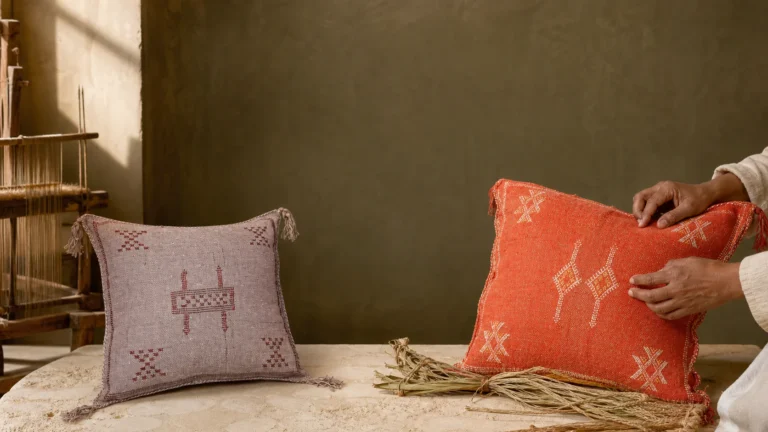
| Tigemi pillow | One-of-one, handwoven, $99, free worldwide shipping | A genuine artisan piece, never repeated |
We want to be straightforward about something the category rarely admits. The term “sabra silk” is used loosely across the market, and a meaningful share of what is sold under that name is not agave fiber at all but mercerized rayon or viscose – a wood-pulp cellulose that mimics the sheen convincingly. This is not always deliberate fraud; the supply chain is old, informal, and rarely tested. It is, however, a reason to be careful with absolutes.
For that reason we describe our pieces as woven in the Sabra tradition rather than making a blanket “100% agave” claim we cannot verify thread by thread. What we can promise is provenance: each piece is handwoven by named cooperatives in Morocco, using the loom, the technique, and the natural-dye palette that define the craft. Where fiber composition is being independently verified, we will say so plainly rather than market past the uncertainty.
Run the burn test on a single loose thread: true plant fiber smells like burning paper and leaves a soft gray ash, while synthetics leave a hard, melted bead and a chemical smell. Add the water test (genuine fiber absorbs a drop within seconds rather than beading it) and the weight test (authentic sabra is surprisingly light). No single test is final, which is why we publish them all and encourage you to use them.
Because honesty is part of the luxury. The category has a known history of rayon-vs-agave mislabeling, and we would rather guarantee what we can verify – the weaver, the loom, the technique, and the natural-dye palette – than make an absolute fiber claim the informal supply chain cannot always substantiate. As independent verification progresses, we report it plainly.
A single panel can take a weaver weeks of hand-work, from retting and spinning to dyeing and weaving on a vertical loom. At $99 with free worldwide shipping, a Tigemi pillow is a one-of-one artisan object – not a mass-produced cushion – priced to honor the maker’s hours while remaining attainable.
No. Well-woven sabra has a smooth, cool hand with a faint structural firmness that designers describe as silk with a backbone. It softens and gains luster with handling rather than roughening.
We do not recommend it. Spot-clean gently with cool water and a pH-neutral soap, blot rather than rub, and air-dry away from direct heat. Machine agitation can stress a handwoven weave and dull natural dyes over time.
Naturally dyed sabra is remarkably lightfast – indigo and madder tend to mellow gracefully rather than fade. We still suggest avoiding harsh, all-day direct sun on any natural textile to preserve depth of color for decades.
One plant. One loom. One pillow that will never be repeated.
Shop the One-of-One Sabra Silk Pillows →