FREE U.S. SHIPPING · DHL EXPRESS DELIVERY
ARTISAN-MADE IN MOROCCO · LIMITED COLLECTIONS
A practical, room-by-room framework for choosing throw pillow colors, textures, sizes and arrangements without making a sofa feel overstyled.
Throw pillows can change the balance of a room faster than almost any other textile. The challenge is not finding a beautiful cushion; it is deciding how many to use, which colors belong together, and how to create contrast without turning the sofa into a display shelf. This guide gives you a repeatable way to style throw pillows using color, texture, scale, and negative space.
Before choosing a palette, look at the surfaces that will remain in the room: upholstery, rug, curtains, wood tones, metal finishes, and wall color. These permanent elements tell you whether the room needs warmth, contrast, softness, or a quieter bridge between existing colors.
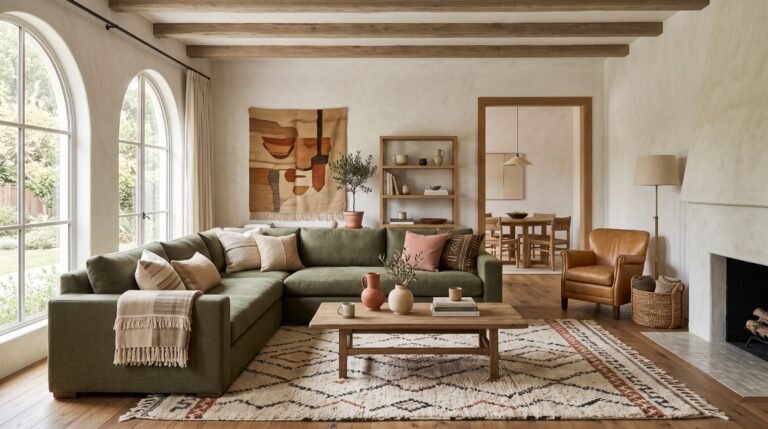
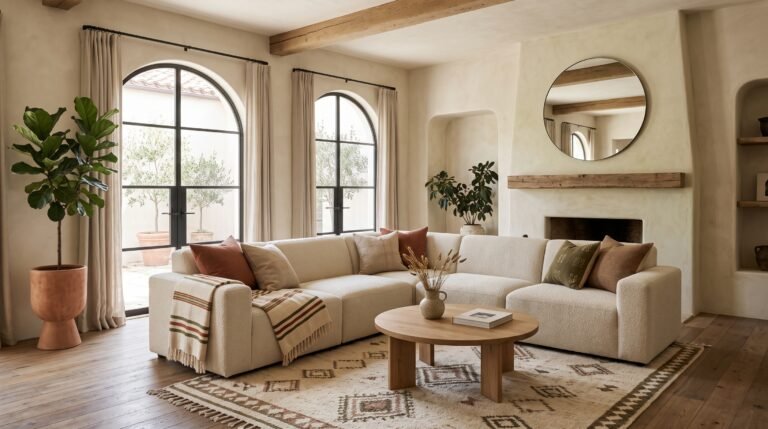
Choose one anchor color already present in the room and one supporting color that adds energy. In a cream living room, terracotta can supply warmth while walnut repeats its depth. In a room with an olive sofa, mustard creates contrast without feeling disconnected because both colors share an earthy undertone.
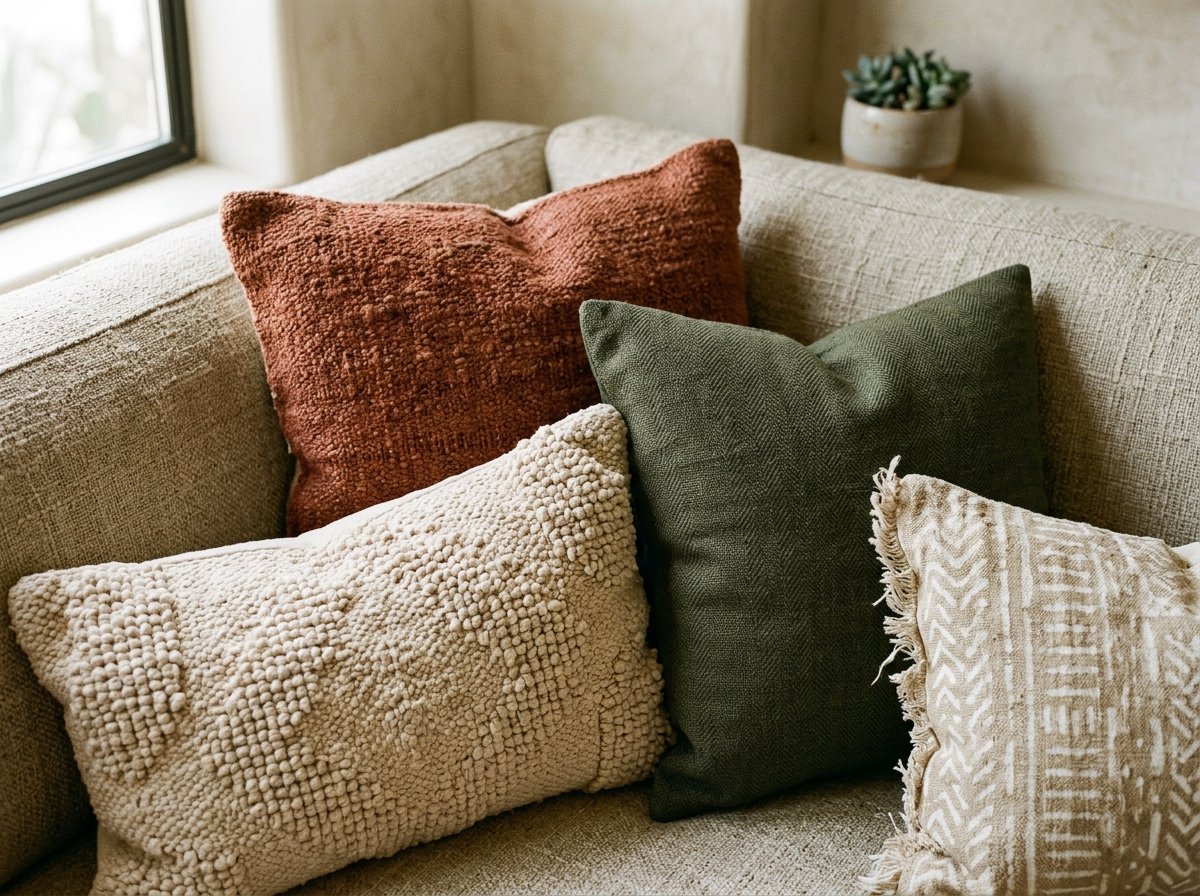
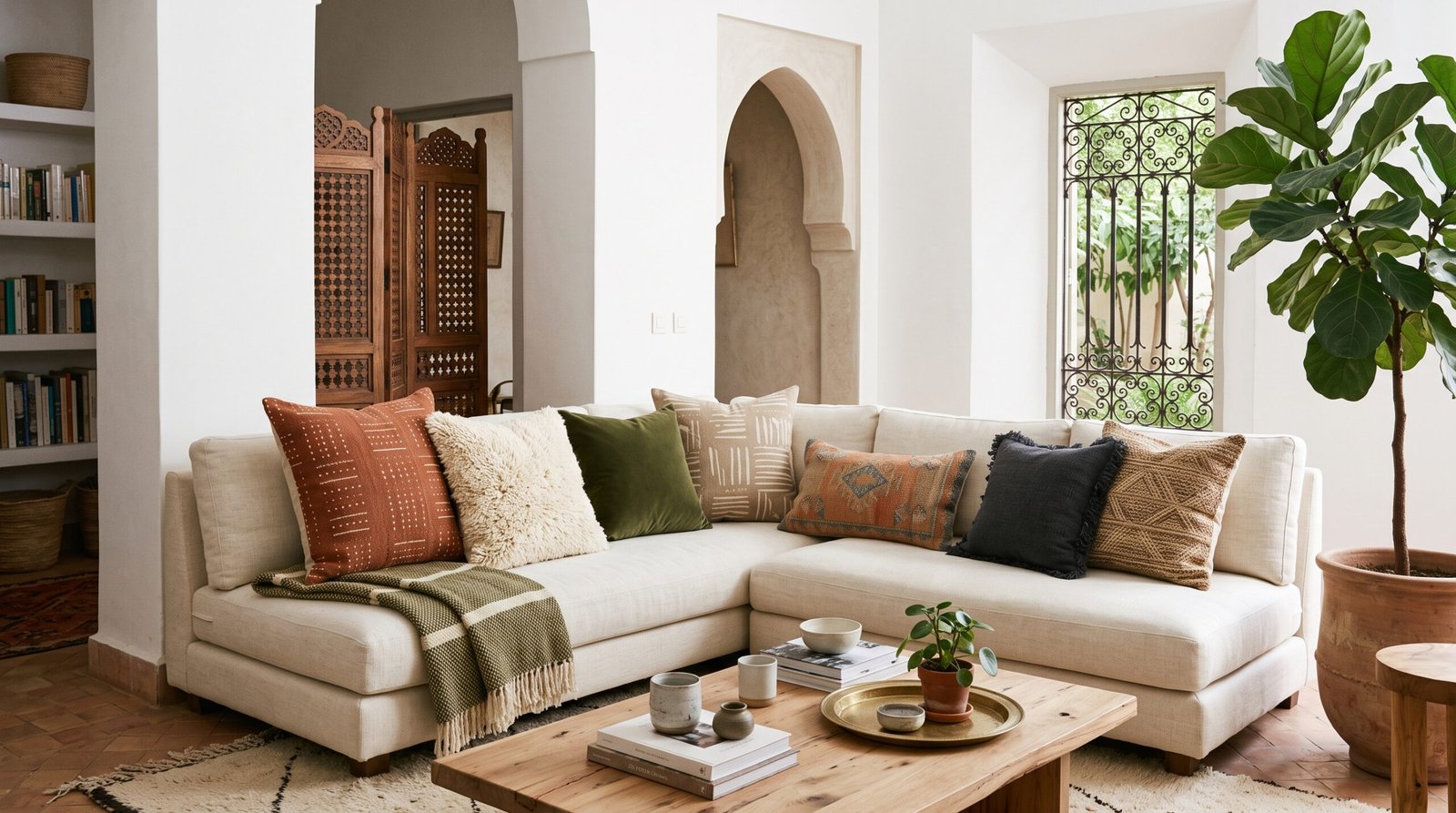
A reliable pillow palette usually contains a neutral, a bridge color, and an accent. The neutral relates to the sofa or rug. The bridge color connects two existing finishes. The accent creates the moment your eye notices first.
You do not need every color in equal amounts. In fact, an accent often works best when it appears only once. Let the largest surfaces stay calm and use the smallest textile for the strongest color.
Rooms feel layered when materials react differently to light. Linen looks dry and relaxed, velvet absorbs light, wool adds softness, and handwoven Sabra silk carries subtle variation. Combining two or three textures often creates more depth than combining several busy patterns.
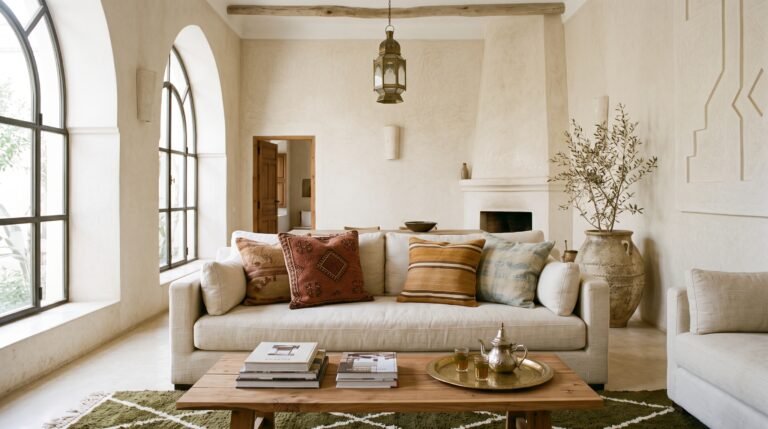
If the sofa is smooth, introduce a pillow with visible weave or embroidery. If the rug and curtains already contain pattern, use pillows with quieter motifs and let the irregular hand-finished surface provide interest. Texture is especially useful in neutral rooms because it creates contrast without introducing another color.
A pillow arrangement feels coherent when at least one element repeats. That element might be material, color family, motif shape, or trim. Once you establish the repetition, vary the size of the pillows and the scale of the pattern.
For a standard three-seat sofa, try two larger square pillows at the outer corners, two slightly smaller pillows inside them, and one lumbar pillow only if the seat still has breathing room. On a compact sofa, one larger square and one lumbar can look more considered than four small cushions.
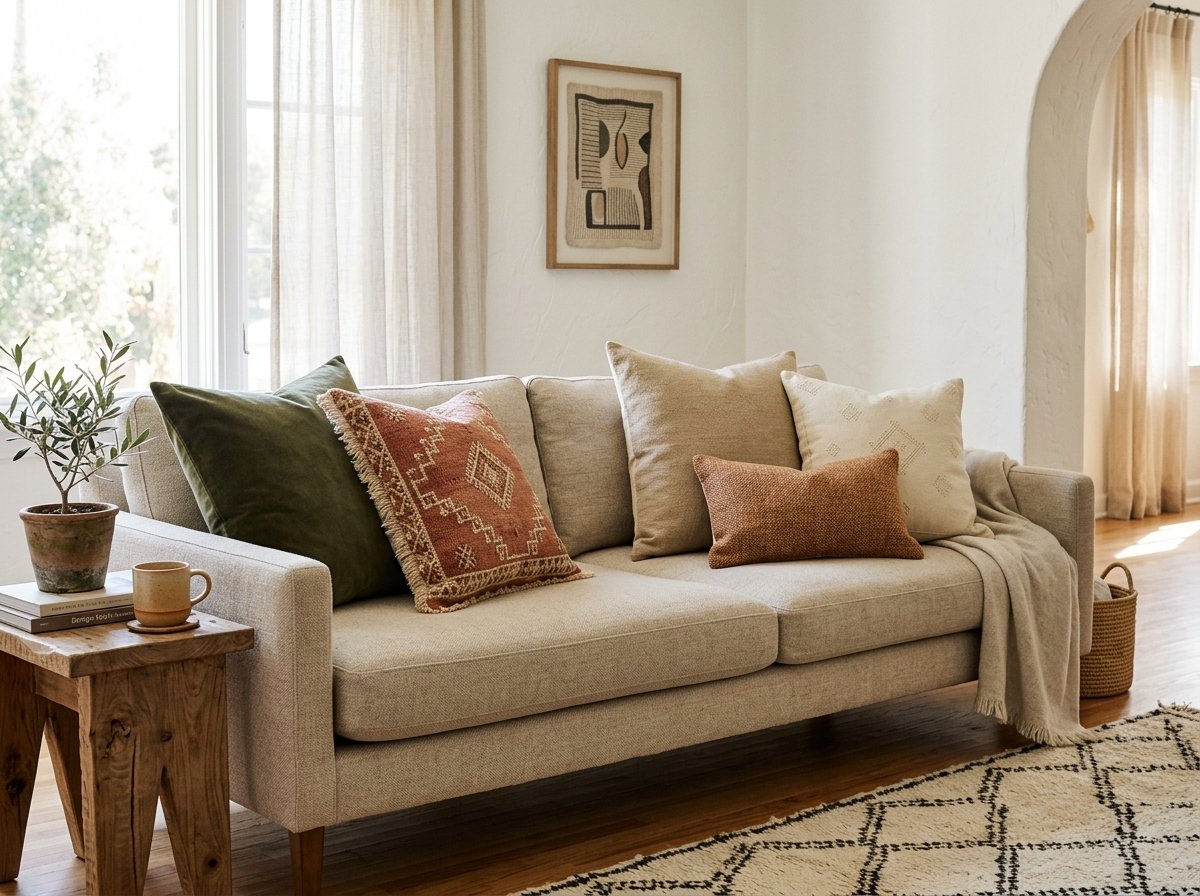
Handwoven textiles are not factory-perfect, and that is part of their visual value. Small variations in weave, motif, color, seams, and tassels make each piece distinct. Avoid forcing handmade pillows into a perfectly mirrored arrangement. A balanced asymmetry usually looks more natural: repeat the color on both sides, but let the motif or size change.
When you buy a one-of-a-kind pillow, check the exact measurements and product photography rather than assuming a standard size. Use an insert that supports the corners without stretching the textile. If the cover has a delicate or aged surface, follow the seller’s care guidance and rotate it away from hard daily wear.
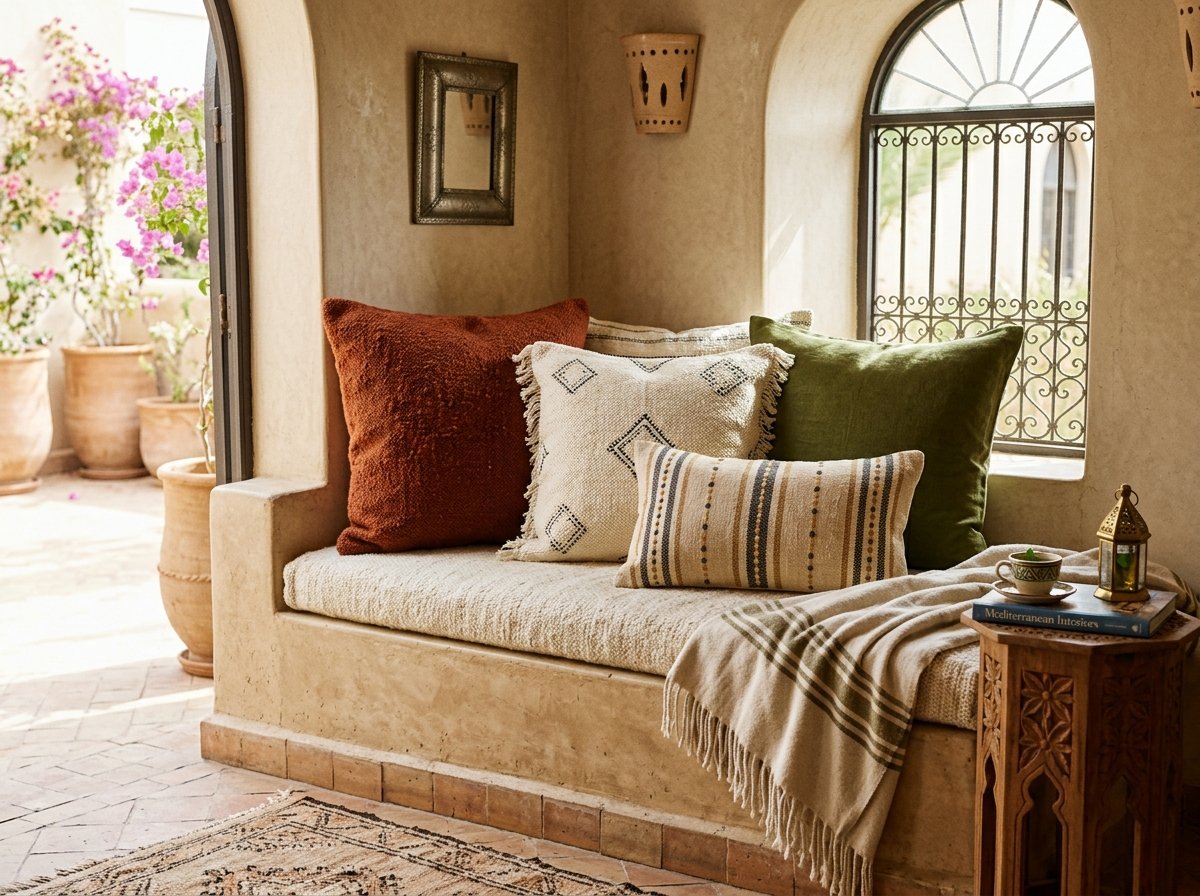
Begin with the two outer pillows because they establish scale. Add one or two smaller cushions only if people can still sit comfortably. For a neutral sofa, use one strong color and repeat it in a smaller detail elsewhere in the room, such as art, ceramics, or a book cover.
Choose one pillow that supports the lower back and leaves the arms free. A single sage, dusty mauve, or terracotta cushion can define the corner. Add a throw in a related neutral rather than a second decorative pillow.
Decorative pillows should be easy to remove and easy to restore. Start with the sleeping pillows, add two medium squares, then one lumbar or one smaller accent. Keep the strongest color near the front so it does not compete with the headboard.
The best throw pillow arrangement is not the one with the most pieces. It is the one that makes the room feel more connected while keeping the furniture comfortable. Start with the room, choose a clear color role for every pillow, and let texture do more of the work.