$99.00Original price was: $99.00.$59.00Current price is: $59.00.
Cover only — insert not included.
$99 includes free tracked DHL shipping to the U.S. Dispatches within 1–3 business days; DHL transit is usually 2–4 business days after dispatch.
Sold as a Sabra-tradition woven textile. Exact fiber composition has not been independently lab-certified.
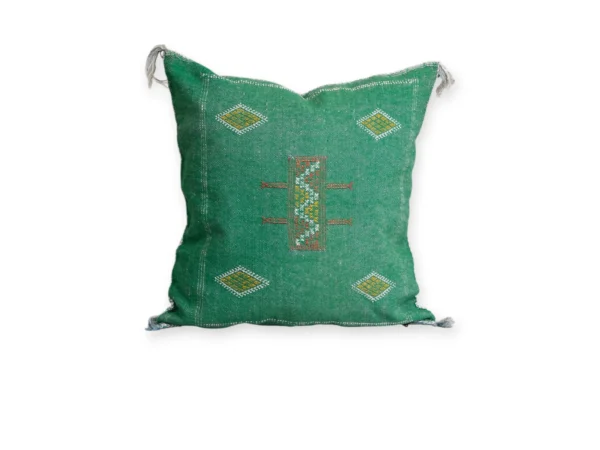
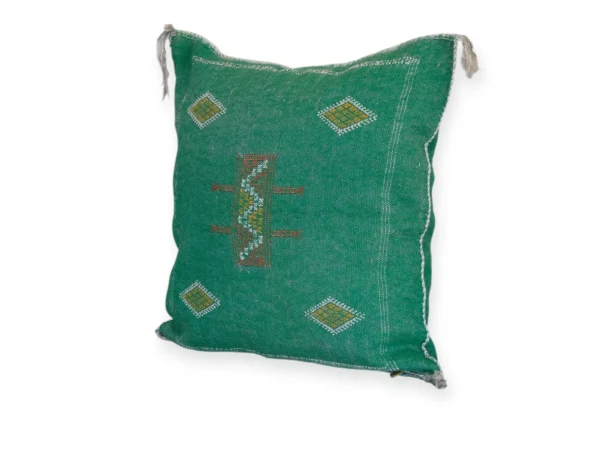
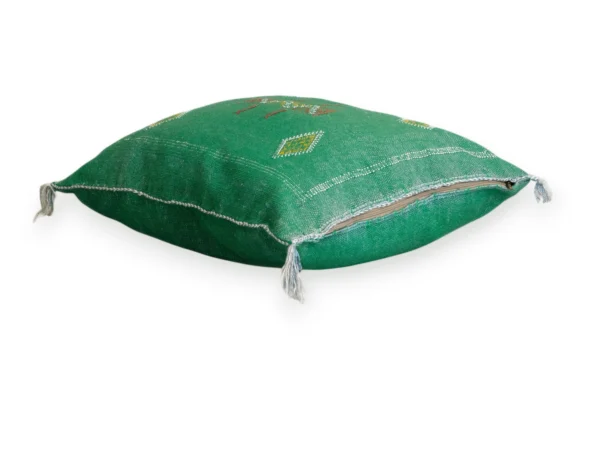
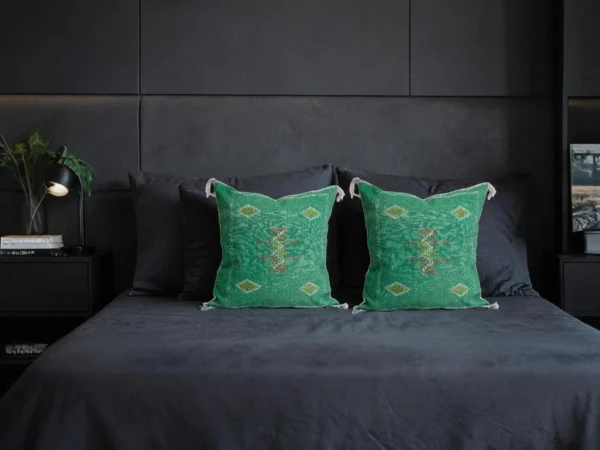
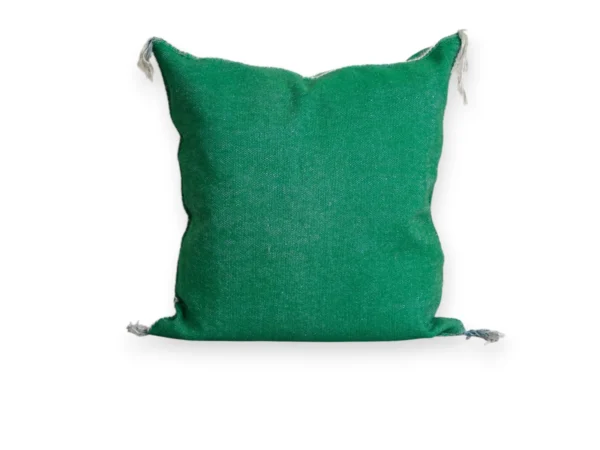
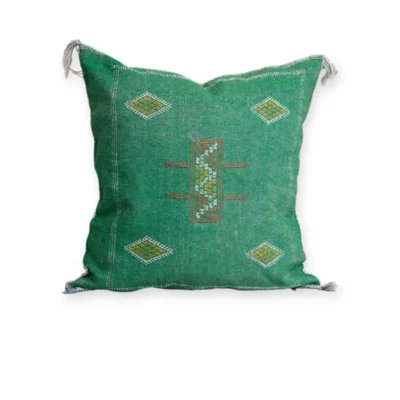
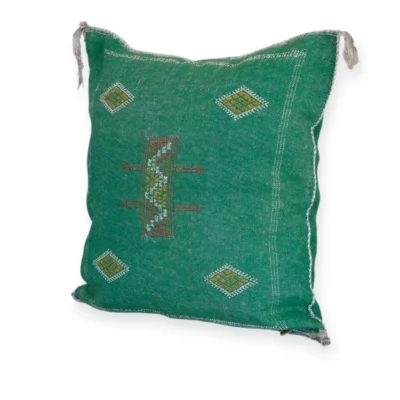
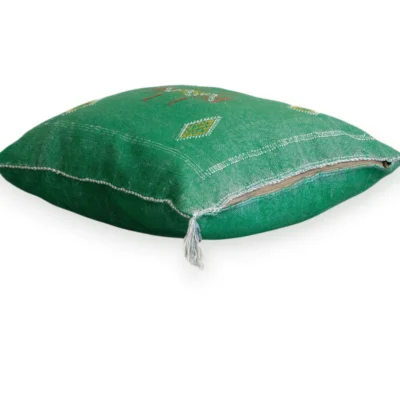
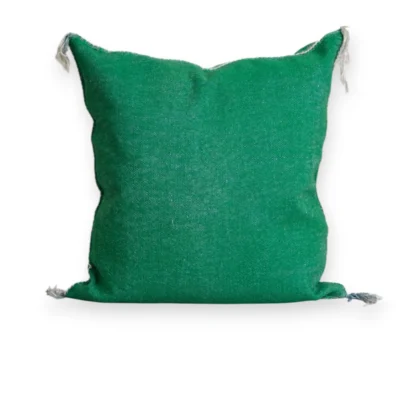
A handwoven Tazenakht Sabra textile pillow cover in emerald green with sun medallion motifs, silver-piped edge and corner tassels. approx. 20×20 in. Side zipper closure. Cover only.
Cover only — insert not included. $59 per cover. Free standard U.S. delivery via Amana in 7–15 days; DHL Express upgrade $39.
The collected lookBuild Your Sabra Set
Savings apply automatically
Mix eligible colorsFree U.S. Amana delivery7–15 day deliveryDHL Express upgrade $3930-day return window
Product clarity: Cover only; insert not included. Sold as a Sabra-tradition woven textile. Exact fiber composition has not been independently lab-certified.
Woven on low-warp looms in the foothills of the Anti-Atlas, this emerald Sabra textile pillow cover holds the color of the palm groves after the first rain — when the terraces of Tazenakht turn green and the valley breathes fresh again. Sun medallions and red ochre stars are woven across its surface using natural plant dyes gathered by the weavers themselves.
Provenance
Each TIGEMI piece is individually sourced and documented for its texture, weaving character, and handmade irregularities. Woven on traditional low-warp looms by artisan women in Tazenakht, Anti-Atlas, no two pieces are ever exactly alike.
Dyed with plant pigments — mint and wild herbs for the green, turmeric for yellow accents, madder root for the red ochre stars — no synthetic shortcuts.
Piece Details
Material
Sabra textile / sabra
Origin
Tazenakht, Southern Morocco
Color
Emerald green with red ochre & turmeric accents
Motifs
Tazenakht sun medallions & red ochre stars, hand-embroidered
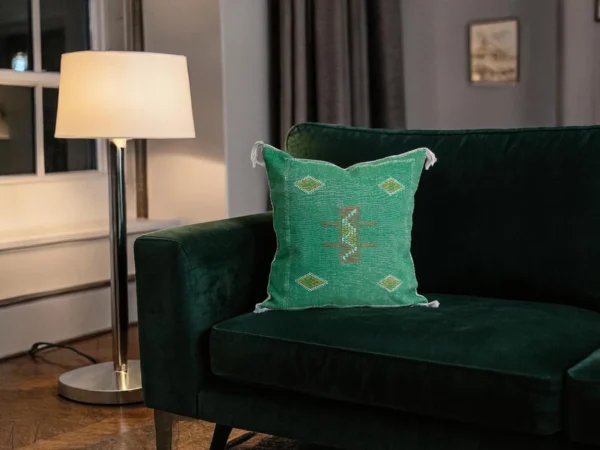
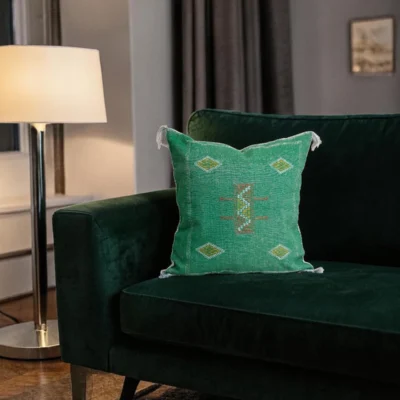
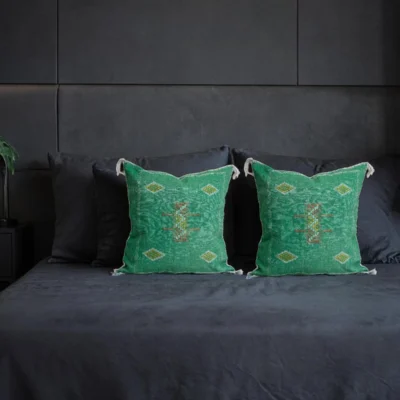
Beautiful set against a cream or natural linen sofa, layered with warm ivories, aged wood and copper accents. A rich, grounding green for collected, artisan interiors.
Care & Longevity
Spot clean gently or hand wash with care, then lay flat to dry. Because sabra is a natural handmade textile, subtle variations in weave, tone, and texture are part of its character.
Because each piece is woven by hand using traditional bidaia tools, dimensions may vary slightly from piece to piece. This is a natural characteristic of the handmade process — not a defect — and part of what makes each TIGEMI piece genuinely individually handmade in Morocco — no two pieces are ever exactly alike.
Reviews
There are no reviews yet.
Be the first to review “Emerald Sabra Pillow Cover — Green Sun Medallion”Cancel Reply
Curated by Tigemi
Complete the Look
Styled sets of three, handpicked to sit together beautifully. Add the whole look in one tap.
We use cookies to improve your experience and analyze site performance.
Accept cookies or manage your preferences at any time.
Essential
Always active
Required for the website to function properly and securely.
Preferences
Allow us to remember your settings and provide a more personalized experience.
Analytics
Help us understand how visitors interact with our website to improve performance.The technical storage or access that is used exclusively for anonymous statistical purposes. Without a subpoena, voluntary compliance on the part of your Internet Service Provider, or additional records from a third party, information stored or retrieved for this purpose alone cannot usually be used to identify you.
Marketing
Help us understand how visitors interact with our website to improve performance.


Reviews
There are no reviews yet.