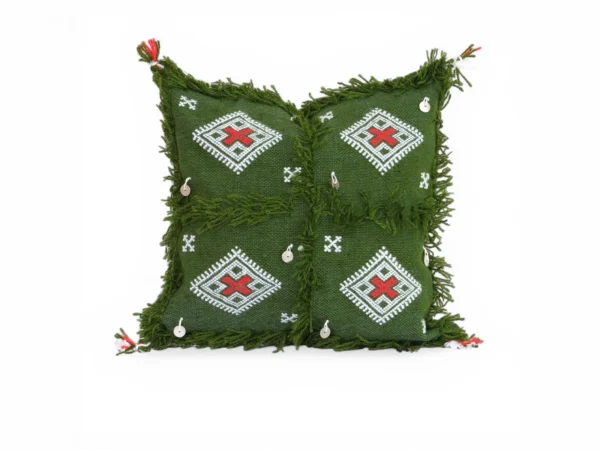
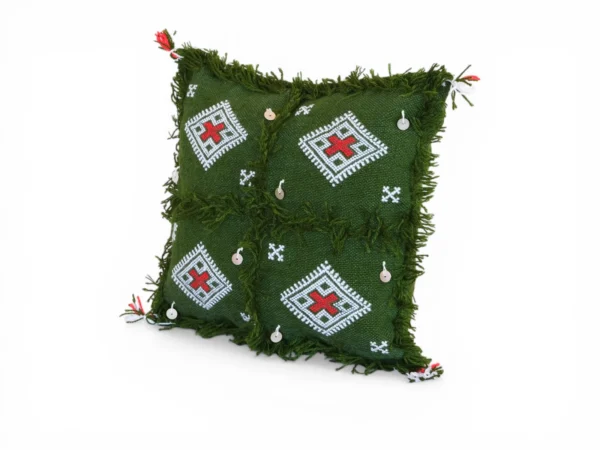
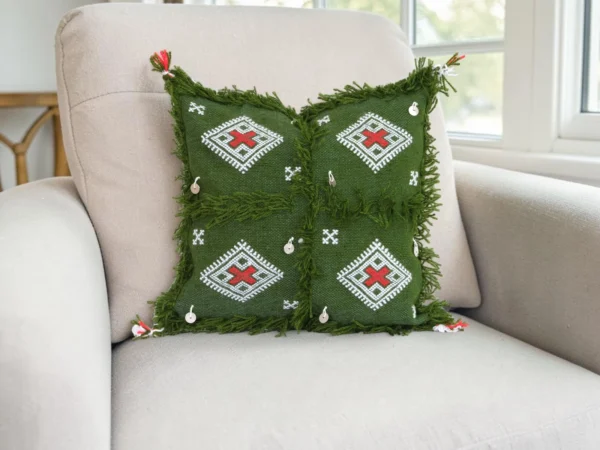
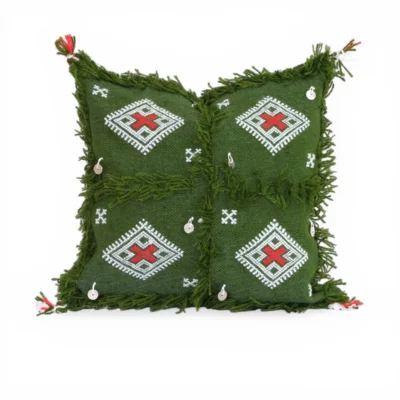
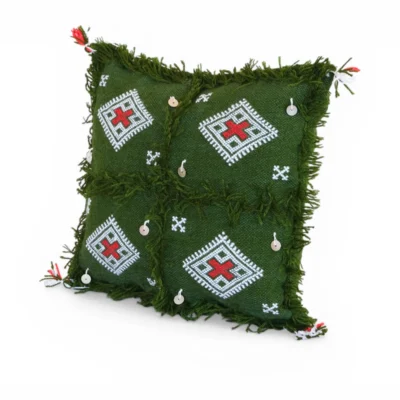
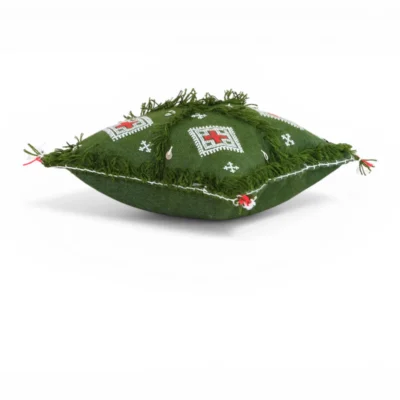
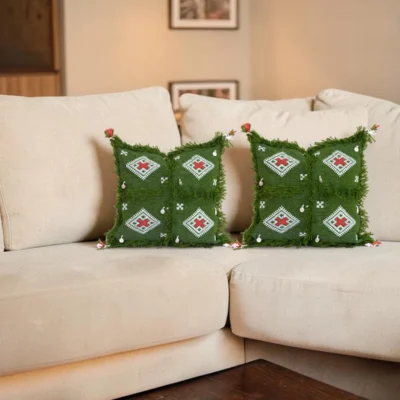
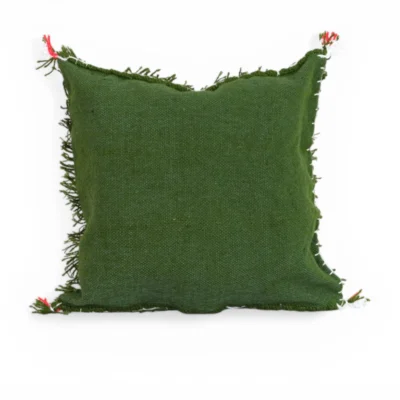
High in the Middle Atlas, Berber women simmer wool in baths of henna, mint, and wild herbs gathered from Khenifra’s slopes — giving this olive green its deep, living quality. Across the hand-dyed ground, bold red cross motifs emerge as tribal symbols, accented with silver charms sewn on with intention.
Provenance
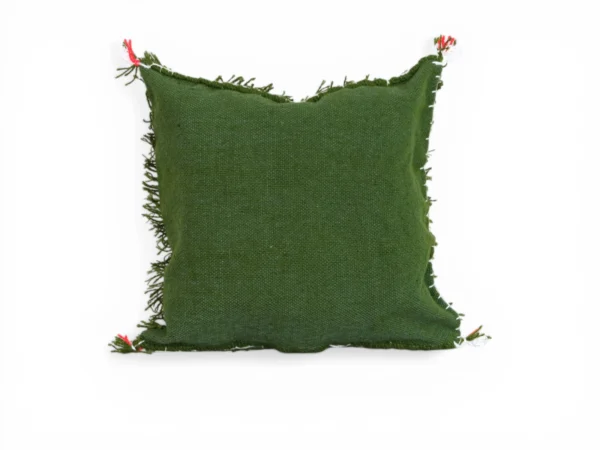
Each TIGEMI piece is individually sourced and documented for its texture, weave character, and handmade irregularities. Crafted on traditional looms by artisan women in the Middle Atlas Mountains, no two pieces are ever exactly alike.
The olive green colorway is achieved through traditional plant-based hand-dyeing — a slow process that gives each piece a unique, living depth that changes subtly with age and light.
Piece Details
Material
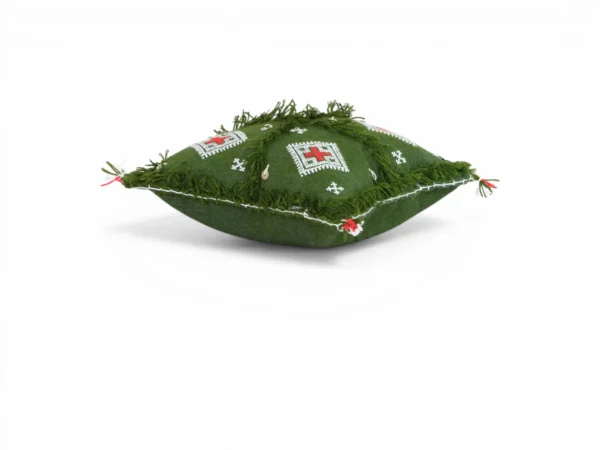
100% Atlas Mountain sheep wool
Origin
Khenifra, Middle Atlas, Morocco
Color
Hand-dyed olive green with red accents
Motifs
Red cross & tribal Berber symbols with silver charms
Size
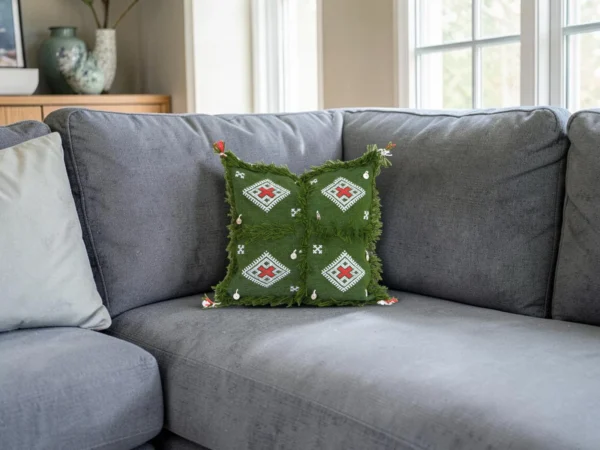
12 × 12 in / 30 × 30 cm
Styling Notes
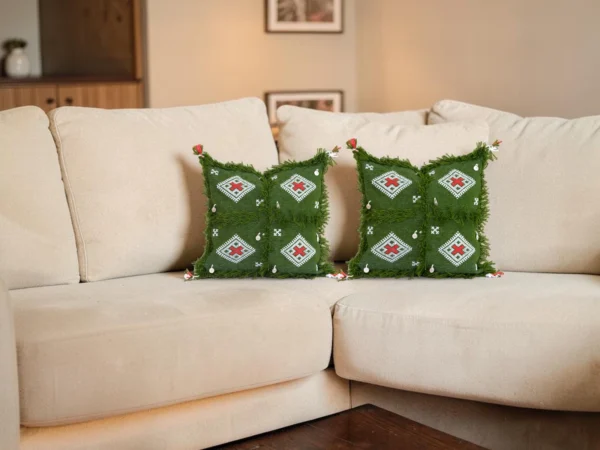
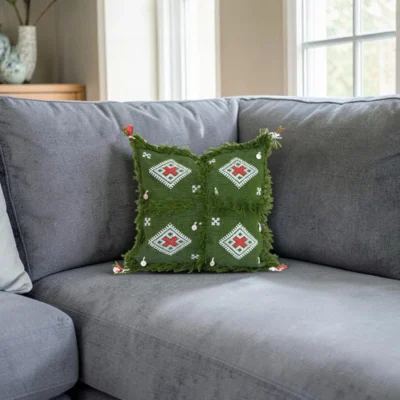
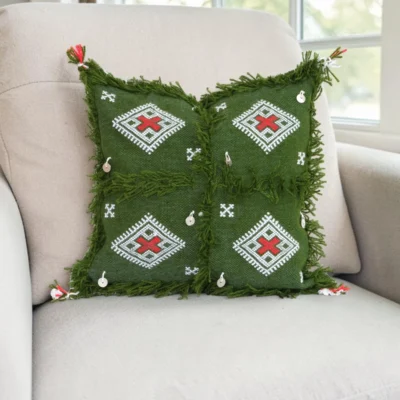
The deep olive green and terracotta red palette pairs naturally with raw wood, leather, aged brass, and earth-toned textiles. Striking as a solo accent or grouped with ivory and earthy cushions in a botanically inspired interior.
Care & Longevity
Dry clean recommended, or gentle hand wash in cold water. Lay flat to dry away from direct sunlight. Natural plant-dyed wool may develop subtle tonal shifts with age — a living quality that deepens the character of the piece.


Reviews
There are no reviews yet.